
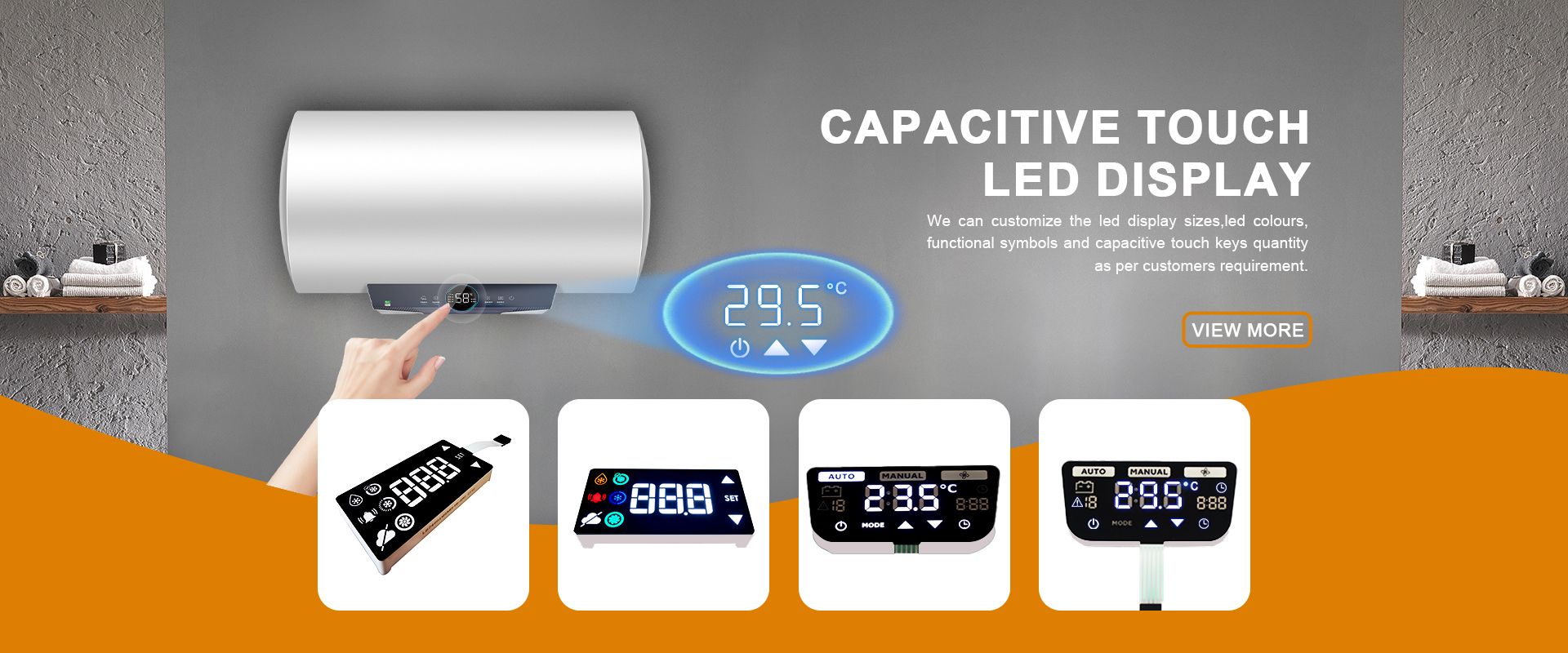
Custom LED Display for Appliance Brands: Prototype to Scale
Time : Sep 10, 2026 View : 342
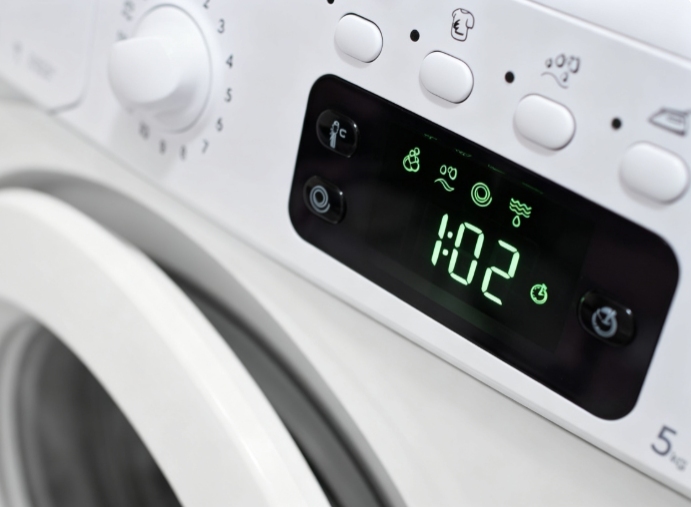
Making modern home appliances calls for a good balance between style, simple controls, and hardware that holds up over time. The display on an appliance control panel works as the main contact point for people and their gear. This makes the choice of parts key to a product’s success.
Working with a specialized LED display manufacturer for appliances lets display modules go from early design ideas to large production runs without issues. As an experienced LED display supplier China based, LIGHTBO supports global appliance brands by handling the full process with custom engineering and strong LED display manufacturing process skills.
Phase 1: Custom Prototype Development and Rapid Co-Engineering
Moving from an initial circuit diagram to a functional physical prototype requires close technical collaboration to solve electrical, optical, and mechanical constraints early in development.
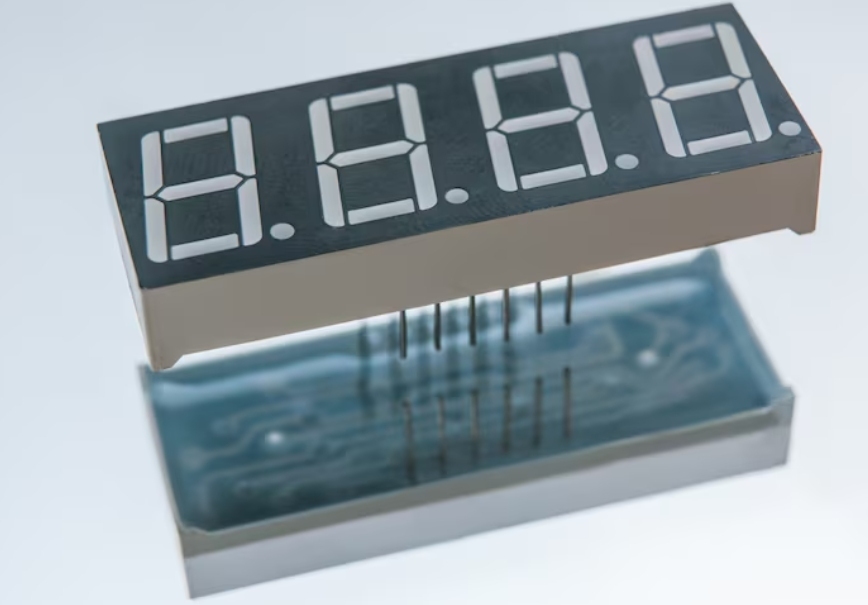
Collaborative Optical and Electrical Customized Design
Engineers need to decide on the precise optical design, digit sizes, and electrical pin arrangement that will match the appliance housing.
- Custom Segment Arrangements: Designing the 7-segment LED display for appliances involves creating icon arrangements, digital digits, and status displays that are designed specifically for microwave timers, fridge control panels, and other appliance control panels. A quality custom 7-segment LED display design will ensure good visibility and interaction.
- Wavelength and Color Matching: Offering customized optical wavelengths such as ultra-bright white, pure green, blue, or multi-color combinations to align with modern appliance visual guidelines.
- Compact Form Factors: Developing thin-profile SMD LED display modules and custom LED backlight panels that minimize space behind glass or plastic interface covers while maintaining strong brightness performance.
Fast-Track Prototyping and DFM Optimization
Rapid prototyping allows engineering teams to validate brightness, viewing angles, and physical fit before committing to expensive production tooling.
- Design for Manufacturability (DFM) Checks: Evaluating pin pitch, thermal paths, and housing structures to prevent light bleeding between adjacent digits and improve the stability of the final LED display module for home appliances.
- Fast Sample Iteration: Delivering functional prototypes through efficient LED display prototype development so product managers can conduct real-world testing on prototype appliances.
- Custom Module Assemblies: Integrating the display board, driving ICs, and custom headers into a unified custom LED display module to simplify downstream assembly and reduce integration complexity.
Phase 2: Stringent Manufacturing Process and Quality Control
Transitioning from an approved prototype to LED display mass production demands high repeatability, robust materials, and rigorous defect prevention at every manufacturing stage.
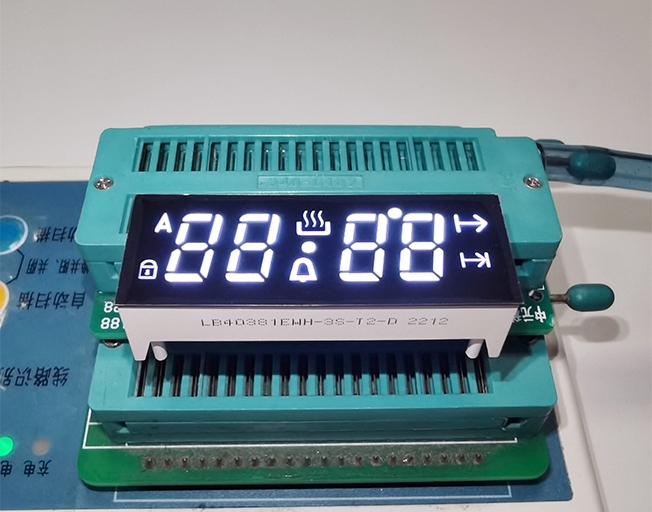
Automated Packaging and Precision Die Bonding
Automated assembly processes ensure every LED segment delivers identical brightness and long-term durability under continuous operation.
- Automated Wire Bonding: Utilizing high-precision die bonding and wire bonding equipment to maintain low resistance and consistent mechanical strength throughout the LED display manufacturing process.
- Controlled Epoxy Encapsulation: Applying specialized reflector resins and epoxy formulations that resist degradation under UV radiation or ambient heat.
- Strict Color and Brightness Binning: Sorting raw LED chips into narrow intensity bins so multi-digit displays remain completely uniform across the panel, which is especially important for LED numeric display module applications.
Environmental and Reliability Testing Protocols
Appliance control panels face demanding operational environments, including extreme temperature fluctuations, high humidity, and continuous electrical loads. Comprehensive LED display reliability testing helps verify long-term performance before shipment.
- Thermal Shock Testing: Testing LED display prototype development units across extreme temperature ranges (-40°C to +85°C) to simulate high-heat environments like smart ovens or cooktops.
- Humidity and Moisture Endurance: Subjecting modules to high relative humidity tests to prevent silver migration and corrosion in washing machines and dishwashers.
- High-Temperature Aging and Burn-in: Running 100% active burn-in testing on production batches to detect early-stage component failures before shipment.
Phase 3: Seamless Mass Production and Supply Chain Continuity
Once validation is complete, a dependable custom LED display manufacturer guarantees consistent batch quality and flexible volume delivery to keep appliance assembly lines running smoothly.
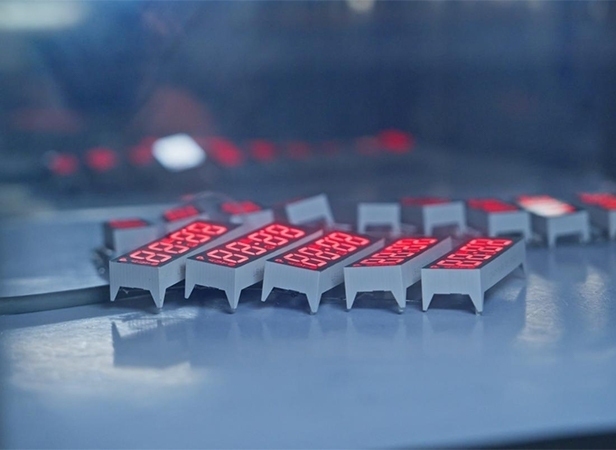
Scalable Production Lines for High-Volume OEM Delivery
Mass production requires stable output and strict quality standards to meet high seasonal demand from appliance manufacturers.
- Automated SMT Assembly: Operating automated Surface Mount Technology lines for high-throughput production of LED numeric display module boards.
- Traceable Quality Management: Implementing strict process control standards to ensure low defect rates across millions of units annually.
- Flexible Capacity Scaling: Adjusting batch sizes smoothly to accommodate market demand changes while supporting reliable LED display mass production schedules.
Application Integration and Long-Term Field Reliability
Integrating specialized display components directly solves real-world application challenges across diverse consumer products.
- Smart Ovens and Range Tops: Heat-resistant custom 7-segment LED display units prevent optical fading and housing issues when exposed to high ambient temperatures.
- Refrigerators and Freezers: Low-power, moisture-sealed display modules maintain clear visibility without generating excess heat inside cooling compartments.
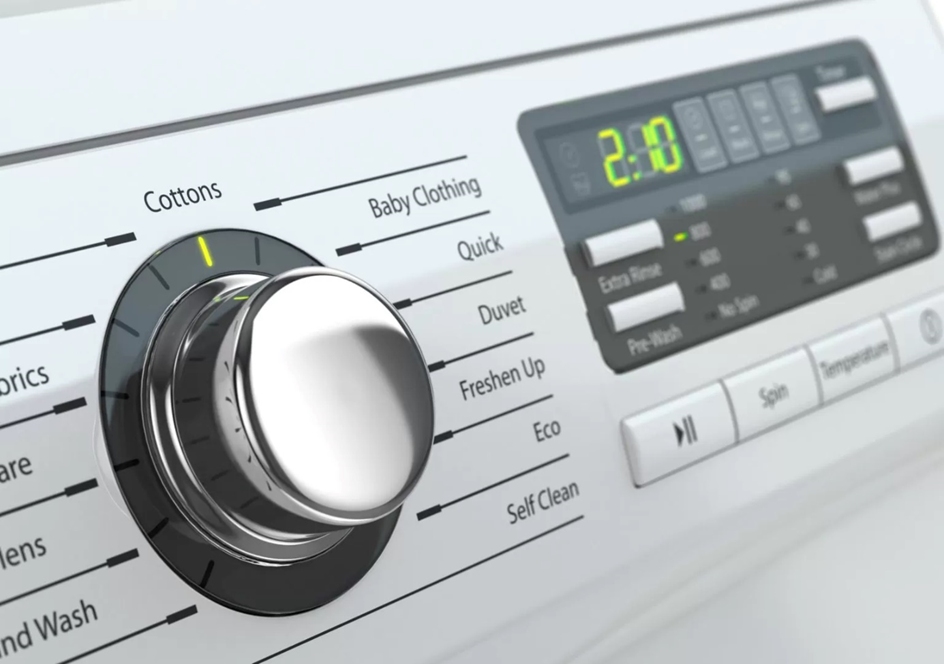
- Washing Machines and Dryers: Vibration-damped LED display module for home appliances resists mechanical stress during high-speed spin cycles.
- HVAC and Thermostats: High-contrast numeric displays ensure clear reading from wide viewing angles under varying indoor ambient light conditions.
Strategic Capabilities of a Specialized OEM Partner
Working with a reliable OEM LED display manufacturer gives appliance brands direct access to specialized manufacturing expertise and cost-effective production.
Complete Display Solutions from LIGHTBO
A dedicated manufacturing partner supports engineering goals with complete display technology and customer-focused services.
- Diverse Product Portfolio: Supplying 7-segment displays, alphanumeric displays, dot matrix modules, light bars, and backlights for different appliance control panel display requirements.
- In-House R&D and Tooling: Operating professional design teams and mold tooling workshops to transform custom concepts into reliable display solutions.
- End-to-End OEM/ODM Services: Delivering complete support from initial schematic review to final volume delivery as a trusted LED display manufacturer China and OEM LED display manufacturer.
Accelerate Your Next Appliance Launch
Upgrading your product line with high-reliability, custom-engineered LED displays does not have to slow down your design cycle. Contact the engineering team at LIGHTBO today to request samples, submit CAD drawings, or discuss customized LED display module solutions tailored to your production timeline.
FAQ
Q: Why are 7-segment LED displays preferred over LCD screens for many home appliances?
A: 7-segment LED displays for appliances offer high contrast, wide operating temperature capability, long service life, lower unit costs, and immediate readability without complex driving software.
Q: How do custom LED display modules prevent light bleeding between adjacent digits?
A: A professional custom LED display manufacturer uses custom-molded reflector housings, light-baffling structures, and optimized optical designs to isolate each segment’s light path.
Q: What environmental reliability tests are essential for appliance display modules?
A: Key LED display reliability testing procedures include high-temperature and high-humidity endurance, thermal shock cycling, active burn-in testing, ESD protection checks, and mechanical vibration testing.
Q: Can customized LED display modules integrate touch controls or driving ICs directly?
A: Yes. OEM suppliers can integrate driver ICs, touch sensors, pin headers, and PCB assemblies into a custom LED display module to simplify final appliance assembly.


