
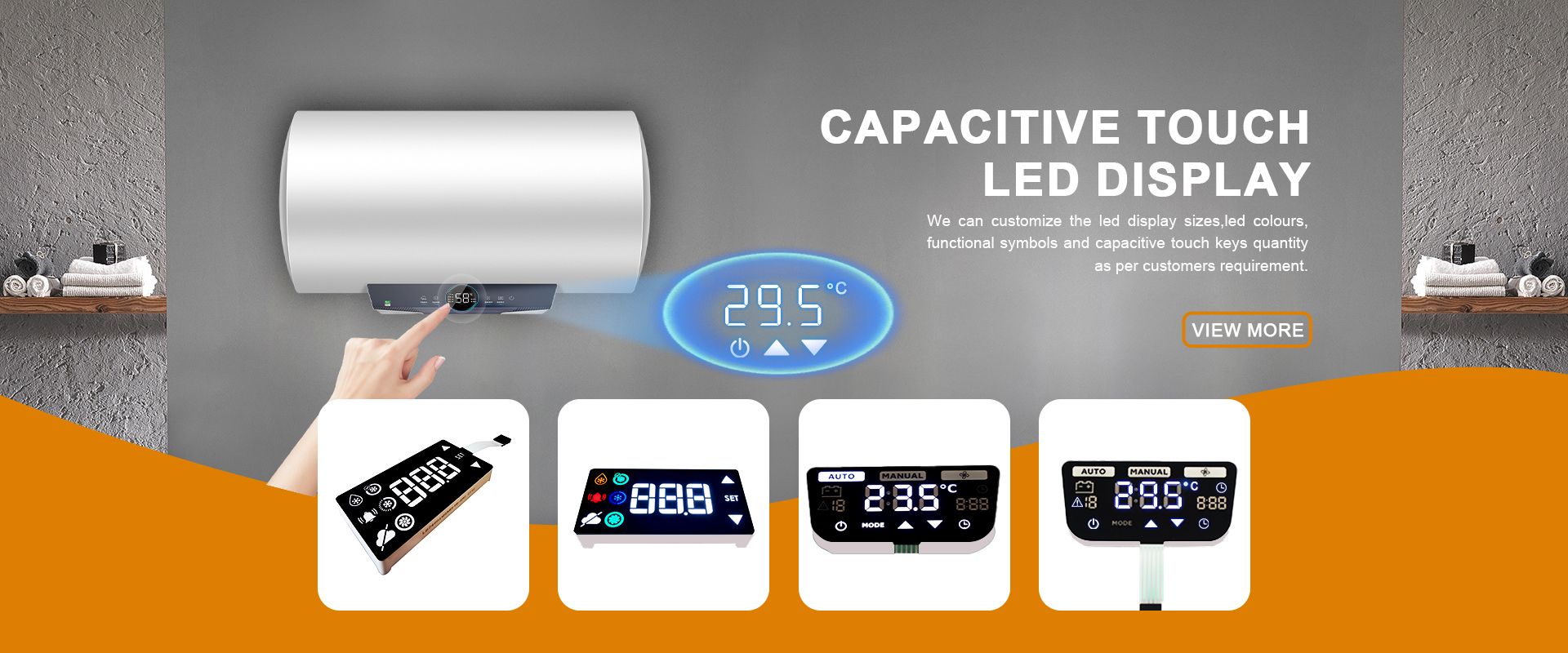
Build Superior Instrument Panels with Custom LED Displays
Time : Sep 17, 2026 View : 277
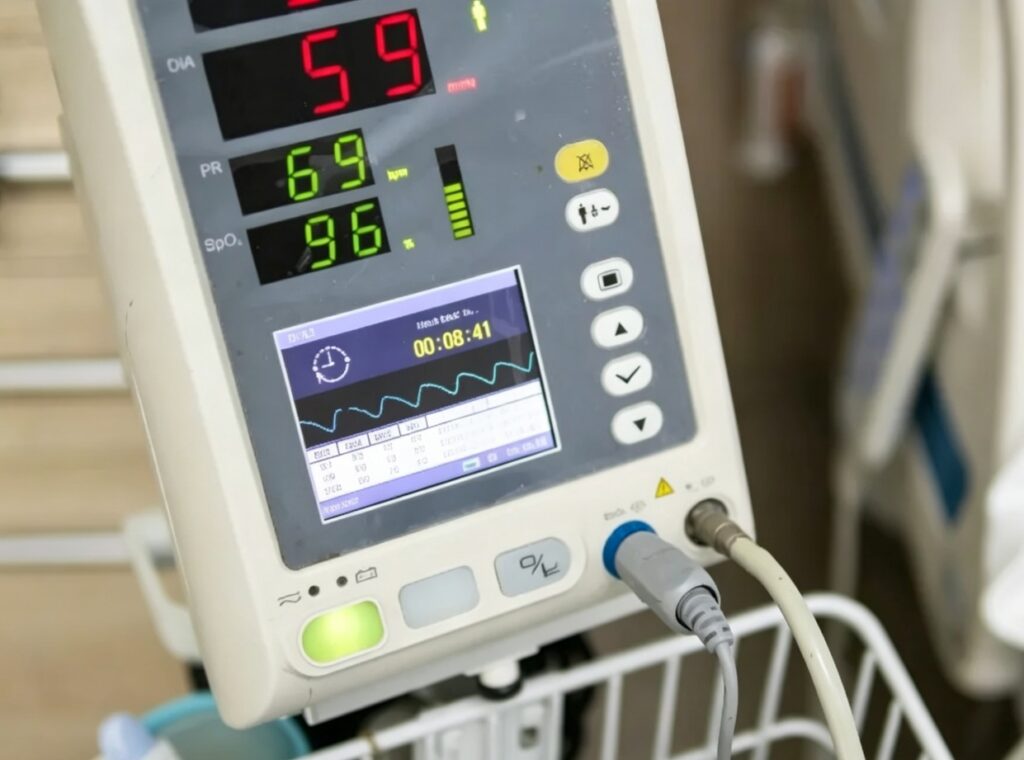
In modern industrial automation, power distribution systems, medical diagnostic units, and heavy equipment cockpits, the digital display serves as the primary visual interface between operator and machine. An unreadable display under bright glare or a flickering numeral caused by voltage drops can lead to operational errors, safety risks, and costly downtime. Engineers designing LED displays for instrument panels must therefore evaluate optical legibility, electrical efficiency, and mechanical durability under demanding conditions.
Key considerations for engineers designing LED displays for instrument panels include:
- Ensuring fast, error-free legibility across variable light environments through strong brightness uniformity and a wide viewing angle.
- Optimizing constant-current driver circuits and display multiplexing to minimize power loss and electrical interference.
- Protecting optoelectronic components against thermal shock and vibration.
- Maintaining uniform optical intensity across all digits over extended service lifespans.
- Selecting compact packaging for multi-digit 7-segment display modules used in tight instrument enclosures.
As a dedicated optoelectronic manufacturer, LIGHTBO provides high-performance standard and custom LED displays for instrument panel solutions engineered specifically to address these industrial challenges.
Optical and Visual Performance Guidelines
Achieving clear visual feedback requires balancing LED die emission characteristics with protective front-panel optics. The following design practices help maximize the readability of an LED display for industrial instruments under changing operating conditions.
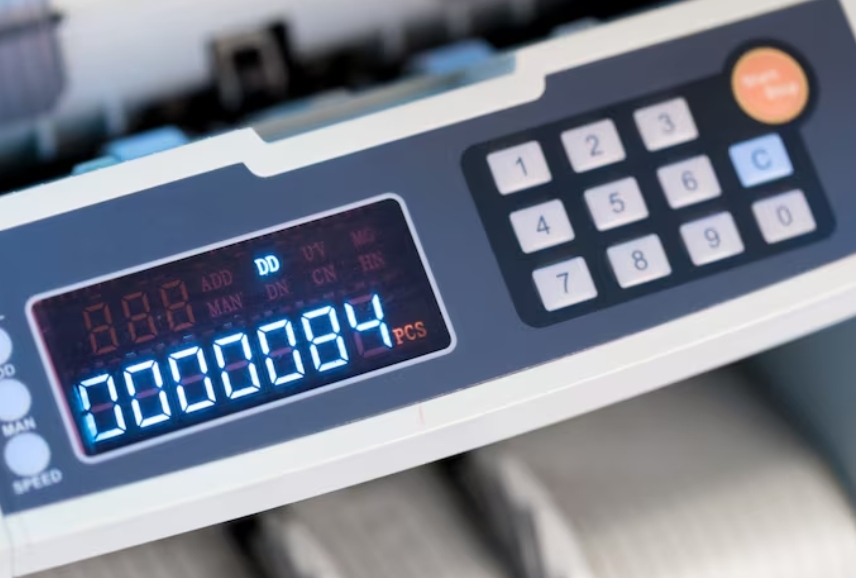
Brightness Uniformity and Wide Viewing Angle
Maintaining consistent visual clarity across the entire panel face prevents operator misreadings and eye fatigue.
- Luminance Matching: Selecting LED chips with tight luminous intensity sorting delivers strong brightness uniformity across all segments, eliminating dim spots or excessively bright numerals.
- Off-Axis Legibility: Using suitable optical diffusers provides a wide viewing angle, allowing field technicians to observe values clearly from off-center positions.
- Contrast Maximization: Pairing high-contrast epoxy package surfaces such as matte black or dark grey with matched optical filters reduces reflective glare in bright ambient lighting.
For an LED display for panel meters, combining brightness uniformity with a wide viewing angle is particularly important when readings must remain visible from multiple operator positions.
Segment Geometry and Multi-Digit Layouts
Structuring display layouts efficiently speeds up parameter recognition while optimizing driver pin configurations.
- Standardized Numeral Fonts: A properly designed 7-segment LED display for instrument panel applications supports fast visual recognition of numeric measurements during routine and emergency operation.
- Integrated Packaging: Implementing a multi-digit 7-segment display reduces overall component count, assembly cost, and PCB area compared with separate single-digit units.
- Custom Engineering Symbols: Integrating static unit indicators such as V, A, °C, RPM, and %RH directly into the display face eliminates the need for secondary markings on the outer panel.
Electrical Design and Driving Architectures
Selecting the proper electrical driver circuit topology directly affects display longevity, power consumption, and electromagnetic compatibility. Stable driving techniques help an LED display for industrial instruments maintain consistent visual output.
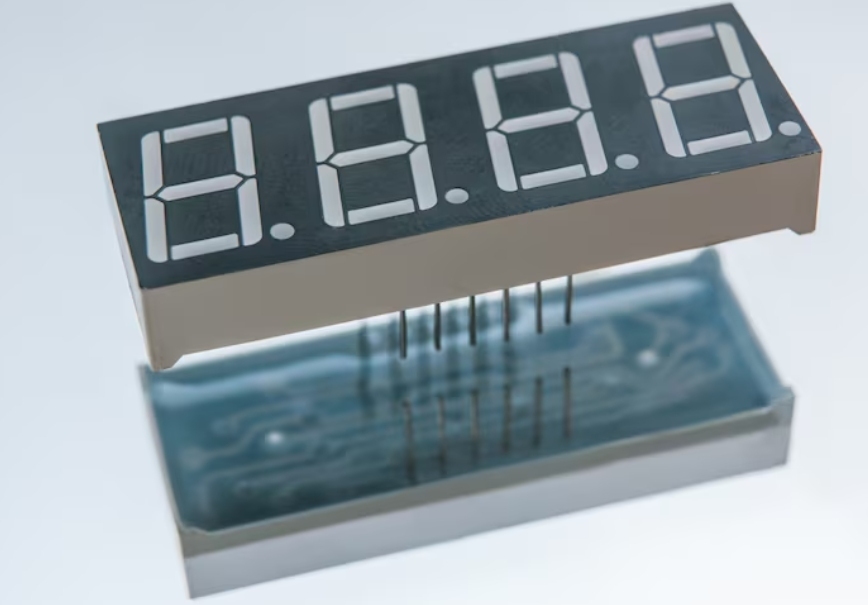
Constant-Current Driver Integration and Multiplexing
Proper current regulation and multiplexed scanning keep thermal production under control while preserving stable illumination.
- Current Regulation: A dedicated constant-current driver maintains stable segment current despite supply voltage fluctuations or LED forward-voltage differences, supporting consistent brightness uniformity.
- I/O Pin Efficiency: Applying dynamic display multiplexing significantly reduces the required microcontroller pin count, simplifying circuit routing for a multi-digit 7-segment display.
- Flicker Reduction: Proper refresh-rate control during display multiplexing helps eliminate visible flicker and supports stable viewing during industrial operation.
The relationship between constant-current driver selection and display multiplexing should be evaluated according to digit count, target brightness, thermal constraints, and PCB architecture.
Thermal Management and EMI Mitigation
Industrial control cabinets often generate elevated temperatures and electrical noise from nearby motors, relays, and switching equipment.
- Heat Dissipation Traces: Designing thermal copper areas around SMD display leads helps conduct excess heat away from sensitive LED junctions.
- EMC Shielding: Placing decoupling capacitors close to driver IC pins suppresses switching noise and helps protect nearby precision sensor circuits.
Environmental Ruggedness and Customization Solutions
Off-the-shelf components frequently fall short when fitting compact, non-standard instrument housings or surviving harsh environmental conditions. A custom LED display for instrument panel applications can resolve these mechanical and optical limitations.
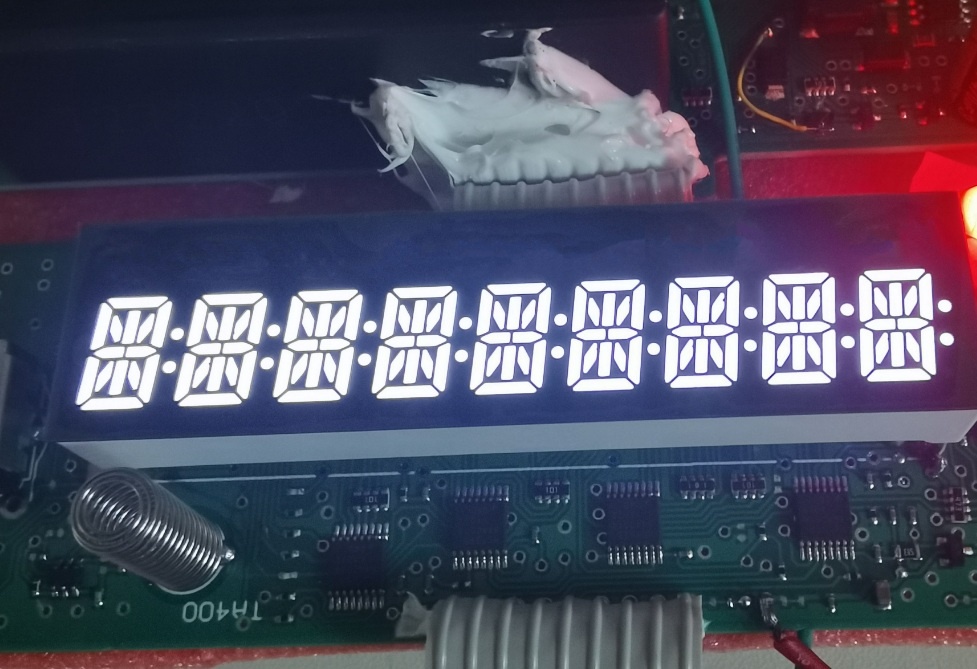
Custom LED Display Solutions for Specialized Panels
Tailored display architecture allows engineers to optimize mechanical fit and electrical performance simultaneously.
- Tailored Form Factors: Developing a custom LED display for instrument panel applications allows customization of pin configuration, digit height, bezel depth, housing dimensions, and surface color.
- Ultra-Low Profile Packages: Surface-mount display profiles support thinner instrument designs without sacrificing required visual output.
- Multi-Color Status Indicators: Dual-color or tri-color LED dies can provide status changes, such as switching from green to red during an over-voltage event.
LIGHTBO can also adapt a 7-segment LED display for instrument panel applications to specific digit sizes, custom symbols, face colors, and PCB layouts.
Durability for Industrial Instruments and Panel Meters
Long-term reliability depends on robust packaging materials and appropriate environmental design.
- Wide Operating Temperatures: A properly specified LED display for industrial instruments can support applications exposed to significant temperature variation.
- Environmental Protection: Suitable encapsulation materials help protect an LED display for panel meters against humidity, dust, and other environmental contaminants.
- Vibration Resistance: Solid-state LED packaging provides strong mechanical robustness for equipment exposed to shock and vibration.
Practical Applications and Problem Solving
Targeted LED displays for instrument panels can directly address visibility and integration issues across industrial control applications.
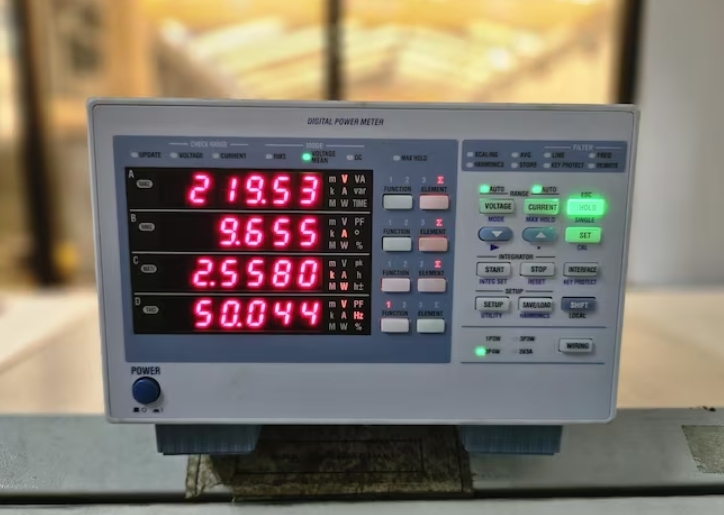
Industrial Process Automation and Power Monitoring
Tailored optoelectronic solutions improve readability and reduce integration difficulties in critical infrastructure equipment.
- Digital Panel Meters: A high-contrast LED display for panel meters improves numerical visibility in substations, factories, and electrical control cabinets.
- Power Quality Analyzers: Multi-digit 7-segment display modules with stable brightness uniformity help operators distinguish rapidly changing voltage, current, and power-factor values.
- Process Temperature Controllers: Custom dual-line displays allow Process Value (PV) and Set Value (SV) to be monitored simultaneously within a compact instrument housing.
Why Partnering with LIGHTBO Solves Display Integration Challenges
Selecting an experienced optoelectronic manufacturing partner helps products transition from prototype development to repeatable volume production. LIGHTBO provides standard and custom LED display solutions for instrument panels backed by engineering support and quality control.
- Comprehensive Product Range: From single-digit displays to multi-digit 7-segment display modules, surface-mount units, and custom light bars, LIGHTBO supports diverse panel applications.
- Quality Verification: Production batches can be evaluated for optical consistency, environmental reliability, and electrical performance.
- Engineering Support: LIGHTBO engineers assist with pinout optimization, constant-current driver selection, display multiplexing, mechanical integration, and custom display layouts.
Ready to Upgrade Your Instrument Panel Performance?
Contact LIGHTBO to request product samples, custom datasheets, or design support for LED displays for instrument panels, LED displays for panel meters, or other customized instrumentation projects.
FAQ
Q: What is the primary benefit of display multiplexing in multi-digit LED applications?
A: Display multiplexing sequentially drives individual digits at high speed, reducing microcontroller I/O requirements and simplifying PCB routing in a multi-digit 7-segment display.
Q: How does a constant-current driver improve LED panel display performance?
A: A constant-current driver maintains stable segment current despite supply fluctuations or LED forward-voltage variation, supporting better brightness uniformity across all digits.
Q: Why are brightness uniformity and wide viewing angle important in industrial displays?
A: Brightness uniformity prevents uneven segment intensity, while a wide viewing angle helps operators read an LED display for industrial instruments accurately from different positions.
Q: How can custom LED display manufacturing help resolve space limitations in compact panel meters?
A: A custom LED display for an instrument panel can be tailored for digit size, housing thickness, symbols, pin layout, color, and mounting style, allowing the display to fit compact panel designs without major enclosure changes.


