
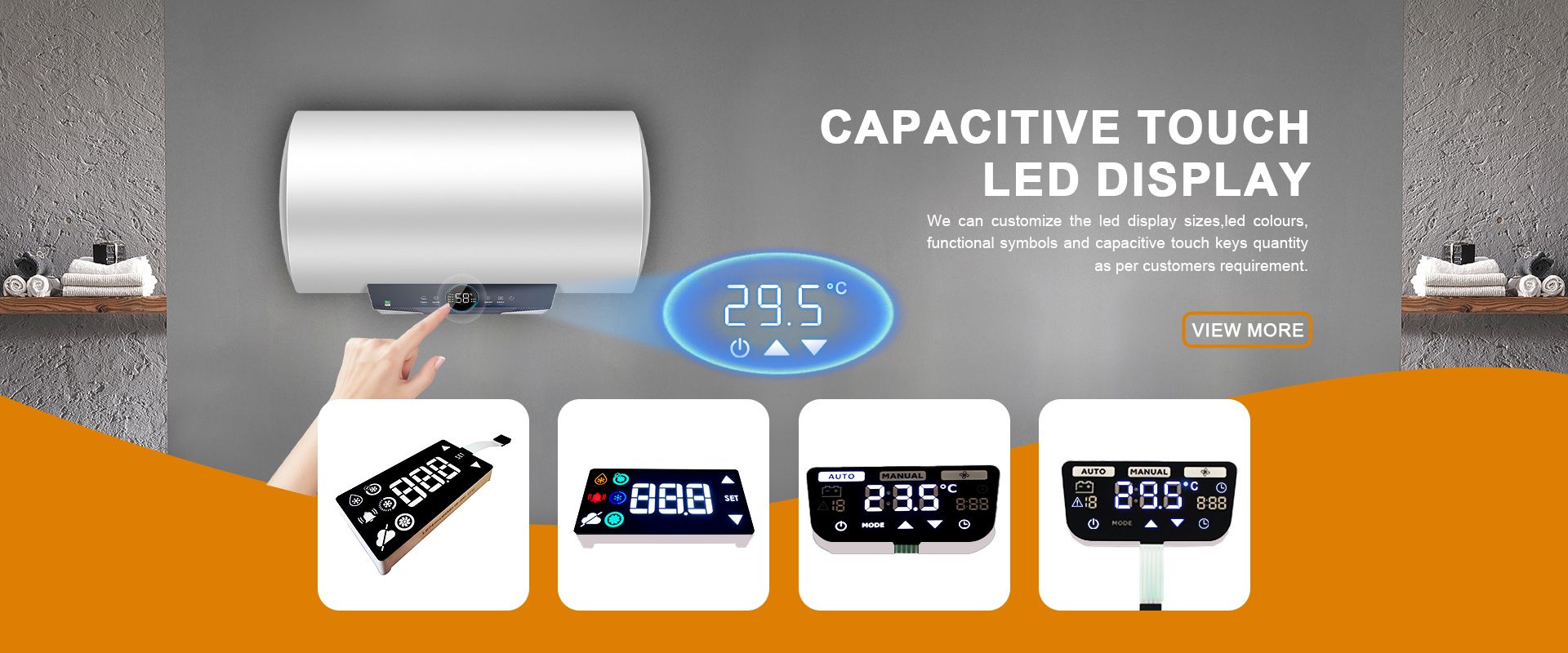
LED vs LCD Displays for Industrial Gear: Why Segment LED Readouts Can Outlast Backlit LCDs
Time : Nov 13, 2026 View : 111
While an LCD display is often the first choice of a panel builder as they can display almost everything on a bench, the operating conditions on the bench decide whether it is an LCD or an LED display that is the best solution. Of key importance are the temperature, the required backlight, the readability in daylight and the service life. Segment LED displays are self-emissive, do not require a backlight and selected LIGHTBO products are specified for more than 50,000 hours under specified conditions. Despite this, however, the LCD still offers more graphics, more colors and a larger screen size. In this article these two display technologies are contrasted on the basis of the criteria that an OEM pays for.
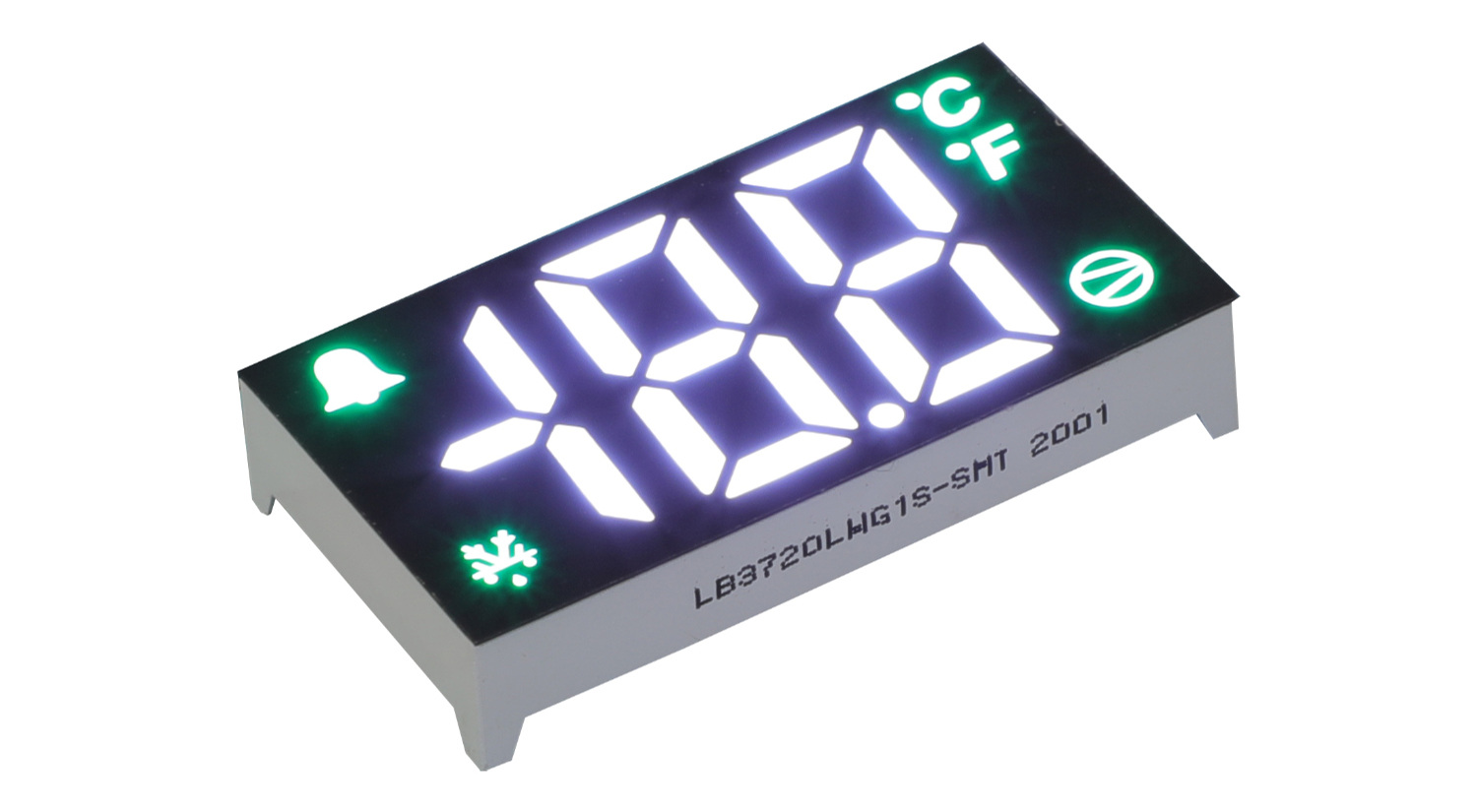
What Industrial Gear Actually Asks of a Display
The industrial panel is a different animal from the consumer product. It is typically installed in a dirty, dusty, hot, cold, vibrating environment. A drive may be hung on a wall next to a motor, a relay may reside in a substation cabinet, and a charger might even be outside. The display shows critical parameters that the operator uses to take action – voltage, current, speed, and fault codes. The display must be able to present this information for the life of the machine.
Industrial control panels are a different brief to a smart-home wall panel. Run from a temperature controlled room and viewed at arm’s length until replaced by the appliance being controlled, industrial control panels have to survive in the plant and be readable across it. Typically for such applications segment LED display modules are selected first for the environment and then for the content.
Temperature Range: Where LCD Chemistry Works Against You
Many LIGHTBO segment modules are rated for operation between -40°C and +85°C, depending on the selected part. This temperature range can suit cold outside usage of cabinets as well as self-heating of segments in sealed enclosures. Unlike LCD liquid crystal material, LED segments do not rely on liquid-crystal response, although their electrical and optical performance is still temperature-dependent.
In contrast, LCDs have a liquid crystal layer between the display’s glass panels. This layer needs to be within a certain temperature range to operate quickly. While cold displays tend to operate slowly, hot displays tend to age the polarizing films and backlight more quickly than the driving electronics will fail. The limits of these materials become apparent in the field long before any problems arise with the display’s control systems. The operational range of LCDs can decline sharply when displays are moved out of temperature-controlled rooms.
Backlight: An Additional Life-Limiting Component
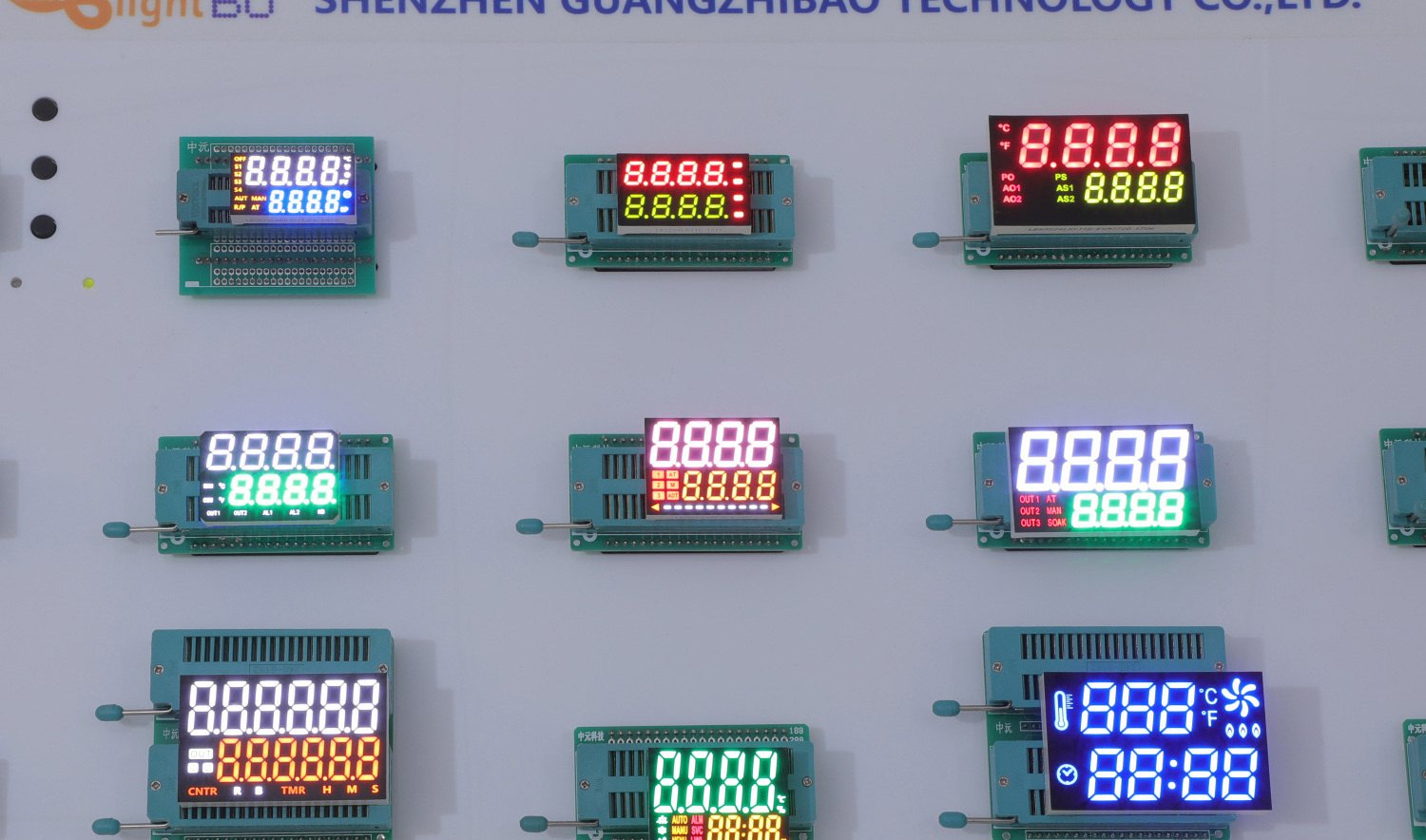
The light source for a segment LED is the individual segment. By letting each segment emit on its own, the contrast can be controlled by the segment and the filter in front of it. There is no light engine that will age behind the panel.
A transmissive LCD is a light valve. That is, the liquid crystals do not emit light, but rather block or allow light to pass through from a backlight. Polarizer films are also used to determine how much light is allowed to pass through the liquid crystals. Adding these components to increase reading capability adds cost and power. Perhaps most importantly, a backlit LCD has an additional failure mode that is not seen in segment displays. Although the display is still being driven, the reading can become difficult or impossible when the backlight has aged or has failed in part. For unattended, long-time operation, the backlight can become a life-limiting component and thus is something to consider in design.
Readability in Sunlight and at an Angle
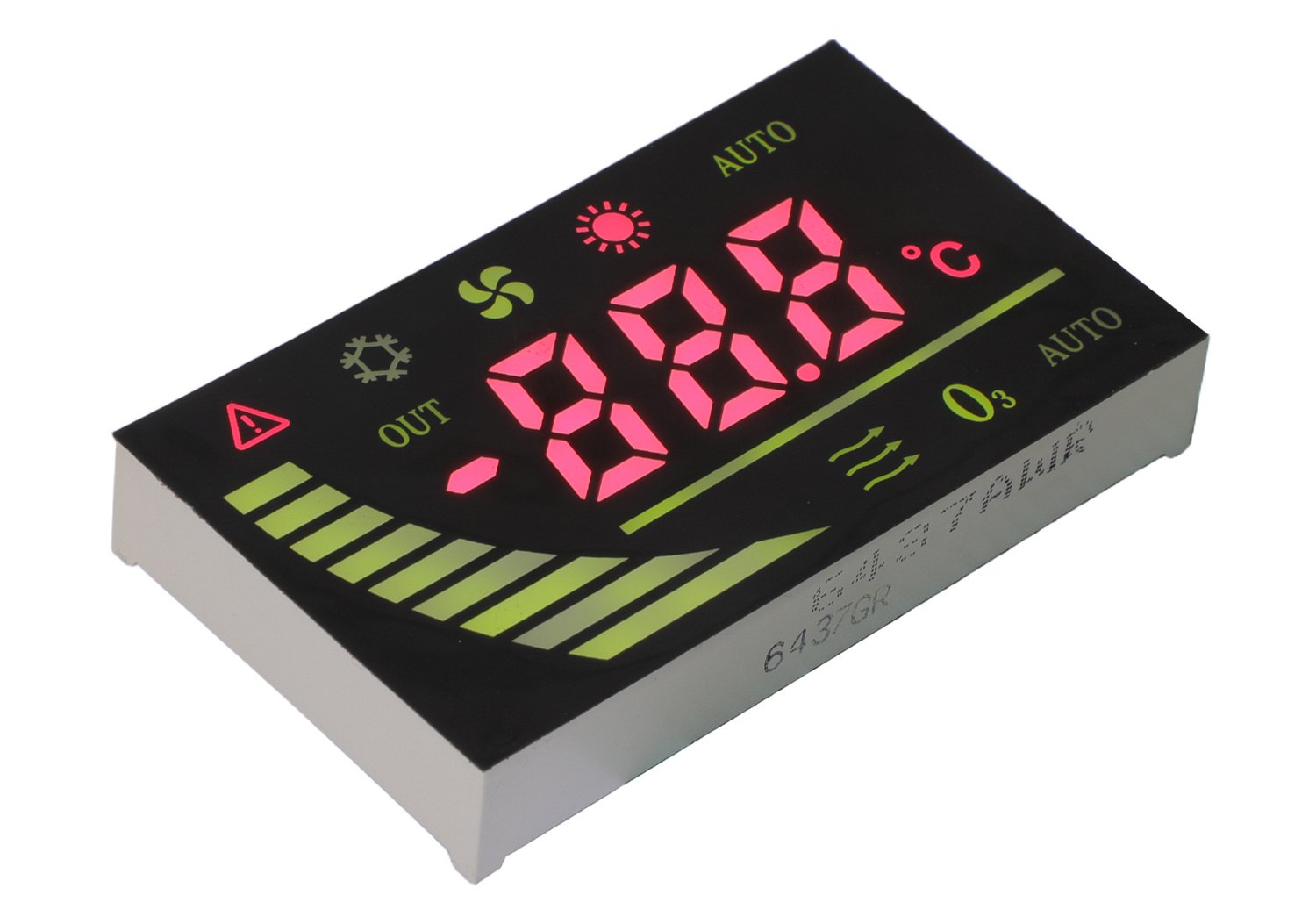
Daylighting of two display technologies. A transmissive LCD must increase the backlight luminance to be read against a sunny background. That power consumption is right out of your budget. A segment LED also needs sufficient brightness and contrast against ambient light for sunlight readability. Segment current depends on the selected LED, drive current and multiplexing scheme.
Off-axis reading is a major challenge in segment design. Some LIGHTBO modules specify viewing angles around 120°, depending on the selected part. An LCD-panel on the other hand becomes less bright and changes its color- reproduction as viewing angle increases. A simple dark window in front of the display can help to increase contrast for LED-modules while the LCD does not have to spend throughput on this.
Service Life and What a Rated Figure Means
LIGHTBO specifies service life of more than 50,000 hours for selected segment modules when operated within the rated conditions. A segment LED does not rely on a separate backlight, although its brightness can decrease over time. Service life of LIGHTBO segments is a specification with conditions, and the brightness maintenance is influenced by drive current, duty cycle and temperature.
A fair comparison requires taking the LCD example to the limiting part, the backlight, and designing around it to replace it or the whole unit. In a segment readout, the parts that emit light are parts, and the connection joints are the mechanical parts that can fail. Reliability testing at LIGHTBO of thermal cycling, burn-in aging, moisture testing and automated optical inspection aims to fail the connection and/or the assembly of the parts.
Where LCD Still Wins
LCD owns a large percentage of panel content. For example, charts, images, multi-language menus, and large areas of varying color all belong on an LCD. For operator interfaces that require trends, schematics, or touch input, a graphic HMI is the best solution.
Segment LED earns its place when the content is a small set of values and states that must be read at a glance from across a room or in daylight. Three or four digits and a handful of status flags are a strong fit, and a 14-segment LED display adds the short text, such as BAL, OV, or OT, that numeric digits cannot carry. Sending that content to an LCD adds a backlight, a polarizer stack, and a second failure mode for no gain.
Choosing a Replacement for a Legacy LCD
Most LED vs. LCD decisions are field retrofits of legacy information displays. The engineering work to support the new display primarily involves determining what you need to display and then finding the best components to support the new information display while leveraging the existing board, connectors, and firmware image.
A segment module is a true drop-in only when the pinout, the pin pitch, the polarity, and the mechanical envelope all match the board. Miss one and it is not a drop-in. Many retrofits split the job: a module for the values, and a display driven through an IC such as the TM1637, HT16K33, or MAX7219, which can reduce MCU GPIO requirements through two- or three-wire control interfaces. That combination removes the backlight and keeps the retrofit small.
Conclusion
The choice between LED displays and LCD displays for industrial equipment is not a question of better or best. More important is the question of what the display panel has to endure and what the operator needs to read. If the content to be displayed consists of a few values and status flags and is to be read in cold cabinets and in hot surroundings, in bright daylight and after long periods of time in unattended areas, then a segment LED display can suit both requirements: selected LIGHTBO modules are rated for operation from -40 °C up to +85 °C, require no backlight and are specified for service life of more than 50,000 hours under specified conditions.
LIGHTBO produces 7-segment numeric displays and 14- or 16-segment alphanumeric displays for industrial control panels. Custom pinout, custom icons and custom units are available. We are interested to discuss your display needs, send you a pinout drawing or even supply you with some engineering samples.
FAQ
Q: When is an LCD the better choice for an industrial panel?
A: Charts, images, multi-language menus, large areas of variable color – content is the main feature. For displaying trends and for drawing schematics a graphic HMI with touch input is the better choice. Segment LED is used for displaying a small number of values or states and is meant to be read at a glance.
Q: Why does the backlight matter so much for LCD reliability?
A: A transmissive LCD is a light valve. It blocks or allows light from a backlight using liquid crystals and polarizing films. A backlight is a separate emitter. It can age. It can even partially fail. A backlit transmissive LCD can become unreadable if the backlight fails. A segment LED is the light source itself, so it does not rely on a separate backlight.
Q: What operating temperature range should an industrial display handle?
A: For cold outdoor cabinets and sealed enclosures, many LIGHTBO segment modules are rated from -40°C up to +85°C. Please check if this rating is available for the chosen part and whether it covers the temperature of the enclosure as the temperature of an installation can vary quite a lot.
Q: Do these displays meet RoHS and REACH for export?
A: LIGHTBO states that its segment display products comply with RoHS and REACH requirements. The manufacturer of the complete panel remains responsible for confirming compliance of the finished product for the target market.


