
RoHS & REACH Compliance for LED Display Modules: An Export Checklist
Time : Nov 19, 2026 Görüntüleme : 43
Exporting LED display modules into the EU and other regulated markets is less about a display being “compliant” and more about being able to prove it, layer by layer, in writing. Two regimes dominate the conversation. RoHS, the EU Restriction of Hazardous Substances rule, decides which substances may sit inside the electronics at all. REACH, the EU chemicals regulation, decides what a supply chain has to register, control, and declare about the chemicals in a product. A segment LED module that clears both is one where every material has a story and a date.
What follows is a working export checklist for the display module itself. It separates the two regimes, walks down the stack of a segment module to show where the restricted substances actually hide, and closes with the documentation an OEM buyer should collect before committing to volume. Keeping those boundaries clear means a “non-compliant” finding in a shipment can be traced to a single layer.
What RoHS and REACH Actually Restrict
The two regulations solve different problems, and conflating them is the most common source of confusion in a compliance conversation. RoHS (EU 2011/65/EU) is a restriction: it sets a maximum concentration of 1,000 ppm, or 0.1 percent, by weight of a homogeneous material for a defined list of substances: lead, cadmium, mercury, hexavalent chromium, polybrominated biphenyls (PBB), and polybrominated diphenyl ethers (PBDE). Four phthalates, DEHP, BBP, DBP, and DIBP, were added at the same limit for toys and childcare articles. The test is a pass/fail on concentration, measured per homogeneous material, not per finished product.
REACH (EC 1907/2006) is broader and information-based. It registers chemicals, restricts a subset, and, through the Candidate List of Substances of Very High Concern (SVHC), tells the supply chain which chemicals must be declared downstream. Under Article 33, a supplier must communicate the presence of an SVHC above 0.1 percent by weight to its customers. That list has grown to well over 200 substances and is updated several times a year, so a REACH statement that was accurate last quarter can already be stale.
For a segment LED display module, the practical read is: RoHS is a “keep these out” limit on a short, fixed list, while REACH is a “tell us what is in it” obligation on a long, moving list. A buyer needs both satisfied, and the evidence for them is different.
Where Restricted Substances Sit in a Segment LED Module
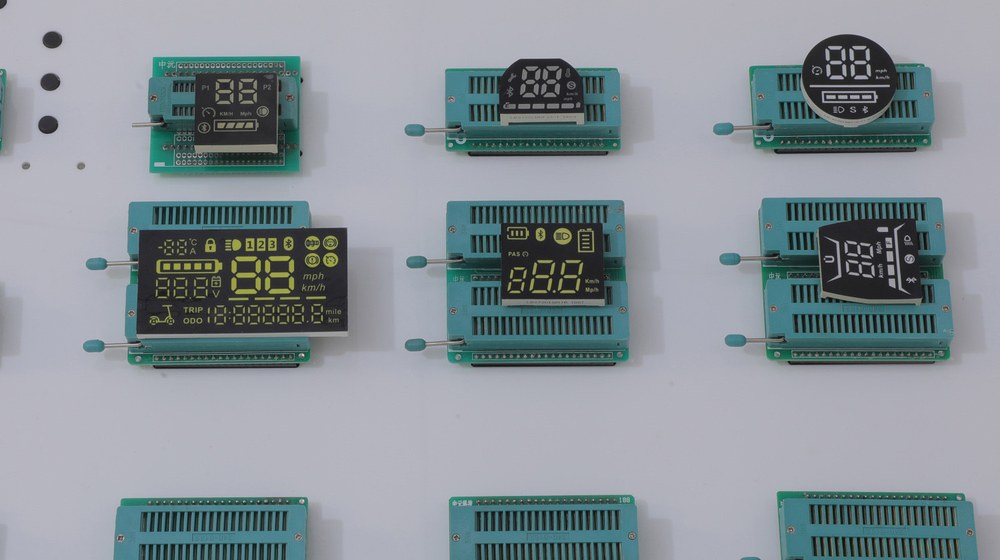
A segment display is a stack of materials, and each layer is a place where a restricted or a very-high-concern substance can appear. Reading it as a stack is the fastest way to turn a compliance question into a parts list.
The solder and interconnects are the classic location. Solder joints, the die attach under each LED die, and the connections to the lead frame have historically used lead-bearing alloys. The lead-free answer is a tin-silver-copper (SAC) solder, and the wire bond, typically aluminium or copper, is generally clean. The residual risk is lead left in a legacy die-attach solder.
The optics layer is the second, and more surprising, hotspot. The lens or diffuser film in front of the segments may carry a flame retardant, and brominated flame retardants, the PBB and PBDE group, are exactly what RoHS targets. A lens that looks identical to a compliant one can fail on its flame-retardant chemistry. The reflective cavity, the encapsulation epoxy and its fillers, and the PCB with its solder mask, flux, and any conformal coating complete the stack.
The module then becomes one component inside a larger appliance or instrument. That is the line the documentation section below draws, because it decides who is responsible for which part of the declaration.
Layer-by-Layer: Making Each Part Pass
Compliance is assembled one material at a time. Here is the checklist, layer by layer.
Solder and interconnect: confirm a lead-free SAC solder and a low-lead die attach, with the board finish specified. Wire bond is aluminium or copper and is not a RoHS concern on its own. Lens and film: require a non-halogenated, non-brominated formulation, because this is the layer that most often produces a finding, the flame retardant being invisible and coming from the lens supplier rather than the display maker.
Encapsulation and fillers: confirm the epoxy and any ceramic or mineral filler are declared, since fillers are where undeclared heavy metals can hide. PCB and coating: a compliant board uses a lead-free surface finish, a compliant solder mask, and, if present, a compliant conformal coating.
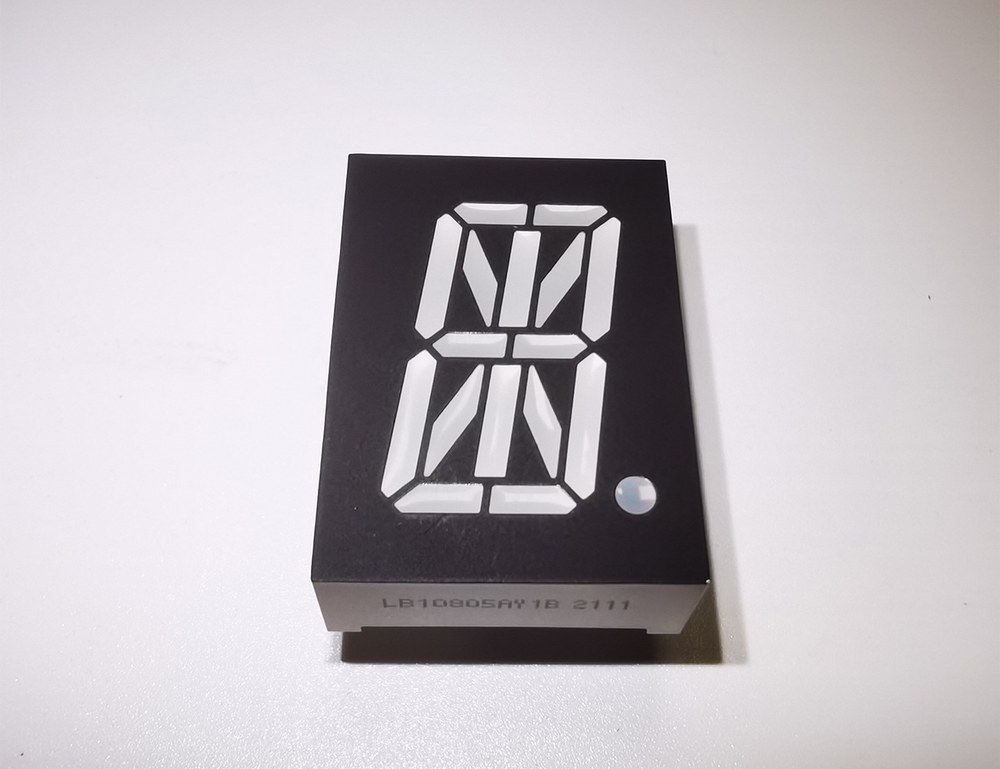
Because these layers differ from part to part, the honest answer to “is this module RoHS” depends on the exact bill of materials. A supplier that builds the module, rather than reselling it, can stand behind a layer-by-layer declaration across its 14-segment and alphanumeric LED display modules.
The Documentation an Export Buyer Should Request
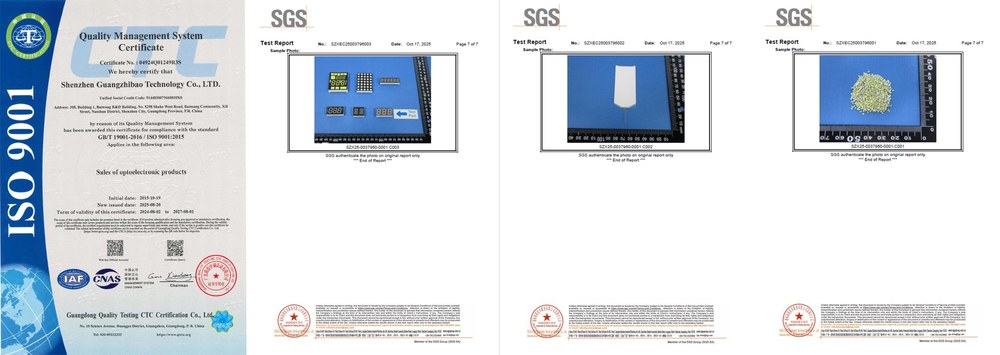
A label on the carton is not evidence. What an OEM buyer should collect and keep on file is a small set of documents.
A Declaration of Conformity to RoHS, issued by the responsible economic operator, naming the specific module type and the directive it claims to meet. A material or substance declaration, typically a per-homogeneous-material list with weight percentages, so the restricted substances and any SVHC above 0.1 percent are visible. This is the document that turns a compliance claim into something an auditor can check.
A dated SVHC statement against the current REACH Candidate List. Because the list moves, the statement needs a date, and an old statement is a liability rather than a comfort. Test reports from an accredited laboratory, commonly to IEC 62321 methods for the RoHS substances, complete the set. The discipline that keeps all of this useful is recency: a declaration is only as good as its date and the laboratory behind it.
Regional Overlays That Stack on Top
RoHS and REACH are the EU floor, and other destinations add their own rules on top rather than replacing them. In the EU, RoHS is one module of the wider CE marking, and WEEE adds end-of-life obligations. In the UK, the UKCA marking and the retained UK RoHS apply. China runs its own disclosure regime for domestic sale, with different rules, and North American and other markets carry their own restriction and disclosure expectations.
The practical effect is that a module built to the EU checklist is a floor, not a ceiling. A destination-specific checklist should be added on top, and the module documentation should be kept flexible enough to absorb it without re-engineering the part.
Sonuç
RoHS and REACH do different jobs, and an export checklist should do the same. RoHS keeps a short, fixed list of substances out of the module, at a defined concentration per homogeneous material. REACH makes the supply chain declare a long, moving list of high-concern chemicals. A segment LED module that passes both is one where the solder, the lens, the epoxy, and the board each have a material story, a date, and a laboratory behind them.
LIGHTBO builds segment and alphanumeric LED display modules to RoHS and REACH requirements, with layer-by-layer material declarations available on request. If you are specifying a display for an export project, we would be glad to walk through the material documentation with you, send a sample, or review your bill of materials.
Sık Sorulan Sorular
Q: Are RoHS and REACH the same requirement?
A: No. RoHS (EU 2011/65/EU) restricts specific substances in electrical equipment to 1,000 ppm, or 0.1 percent, per homogeneous material. REACH (EC 1907/2006) is a chemicals regulation that, through the SVHC Candidate List and Article 33, requires the supply chain to declare substances of very high concern above 0.1 percent. A module must satisfy both, and the evidence for each is different.
Q: Which part of an LED display module is the most common RoHS failure point?
A: Two layers stand out. Solder and die attach, where lead-bearing alloys were historically used, and the lens or diffuser film, where a brominated flame retardant is invisible and comes from the lens supplier. Checking the solder alloy and the lens flame-retardant chemistry first catches most findings.
Q: How often should a REACH SVHC statement be refreshed?
A: Because the REACH Candidate List of SVHC is updated several times a year and now lists well over 200 substances, a statement should carry a date and be re-checked whenever the list changes or a new design revision is released. A statement that is several quarters old can already be out of date.
Q: Does a RoHS-compliant display module make the finished appliance RoHS-compliant?
A: No. The module is one regulated component inside a larger product. The finished appliance is assessed and declared by its own manufacturer, who must confirm that the module, together with every other component, meets the requirement. A compliant module removes a risk; it does not certify the system.


