
Custom vs Off-the-Shelf Segment LED Displays: A Decision Guide for OEM Buyers
Time : Nov 20, 2026 View : 32
Every OEM that puts a display on its product eventually faces the same fork. Buy a standard segment module off the shelf, or commission one to the millimetre and the pinout. Both are viable, and the wrong one is expensive in different ways. A stock part that does not fit forces a board redesign. A custom part that did not need customising wastes tooling money and adds lead time to a product that did not need it.
This guide lays out the decision as a buyer would make it: when a standard module is the right answer, what specifically justifies custom engineering, what customisation actually changes about the part and the programme, and the middle path that many projects land on. The goal is to make the trade explicit, in cost, tooling, and schedule, before the first sample is ordered.
When an Off-the-Shelf Module Is the Right Answer
Standard module libraries exist for a reason: the vast majority of displays on the market show the same content in roughly the same form factors, so a curated range of digit heights, pinout families, and colours covers a large share of real projects. An off-the-shelf module is the right answer when the mechanical envelope, the digit count, and the pinout all line up with what the product already needs.
Three conditions point to stock. The first is fit: the board has a standard footprint, a standard pin pitch, and a common anode or common cathode polarity that the catalogue already offers. The second is content: the display shows digits and a small set of standard symbols, and does not need a company logo, a proprietary unit, or a non-standard segment shape. The third is volume: the programme does not need a tool that a stock part would not amortise, and the unit price of a standard module at the expected quantity is simply lower.
When those three line up, the stock part wins on price, availability, and schedule. A standard segment LED display module matched to the existing board is the low-risk path, and engineering effort is better spent on the surrounding product than on re-proving a display.
What Actually Justifies Custom Engineering
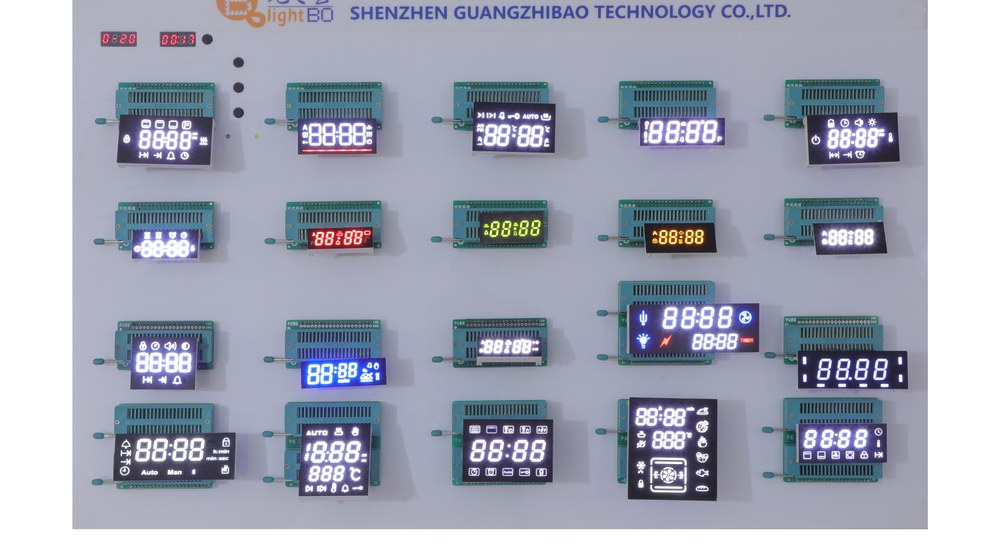
Custom engineering earns its keep when a specific requirement cannot be met by any part in the standard range. The strongest justifications fall into a short list, and a buyer can score a project against each.
Drop-in pinout is the first and often the most valuable. A legacy product has a board, a connector, and firmware that already drive a display with a specific pinout and pitch. A custom module engineered to that exact pinout is a true drop-in replacement, and the project avoids the cost of redesigning the mainboard or re-spinning the firmware.
Custom character content is the second. A company logo, a proprietary unit symbol, a brand-specific segment shape, or a set of status icons that no catalogue part carries all require a custom segment layout and, therefore, custom tooling. Digit geometry is the third: a non-standard digit height, a specific aspect ratio, or an unusual character count that a standard size cannot provide.
Integration is the fourth, and it is increasingly common. Combining the display with an on-board driver IC so the module speaks a two- or three-wire serial interface turns a multi-pin component into a simple drop-in for a low-pin MCU. When that integration is engineered to the buyer’s exact pinout and pitch, it saves board space and parts. A 14-segment LED display with a custom layout and an integrated driver is a typical end state for such a project.
What Customisation Changes: The Parts, the Programme, the Schedule
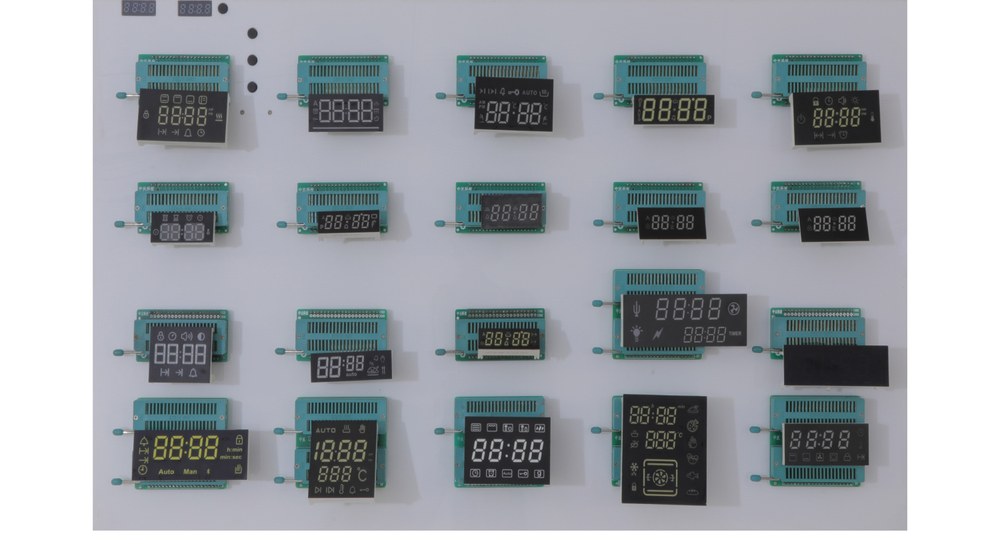
Once a project moves from stock to custom, several things change at the same time, and the buyer should understand each before committing.
On the part, customisation changes the mechanical envelope, the pinout, the segment and character layout, the polarity, and the driver architecture. Each of those is a design decision, and each needs to be fixed before tooling is cut, because changing one after the fact can cascade into the others. On the programme, custom adds a tooling step that a stock part does not have. The tool amortises across the volume produced, so a custom part is only cheaper at the unit level once the programme is large enough to spread that cost.
On the schedule, custom adds a lead-time step that a stock part does not have. A standard module can be shipped against an existing stock. A custom module goes through design, a sample build, a design check, and then tooling, and the sample is what the buyer’s firmware and mechanical teams actually test against. The right answer depends on the volume, the fit, and the content requirements above.
The Middle Path: A Standard Base with Custom Layers
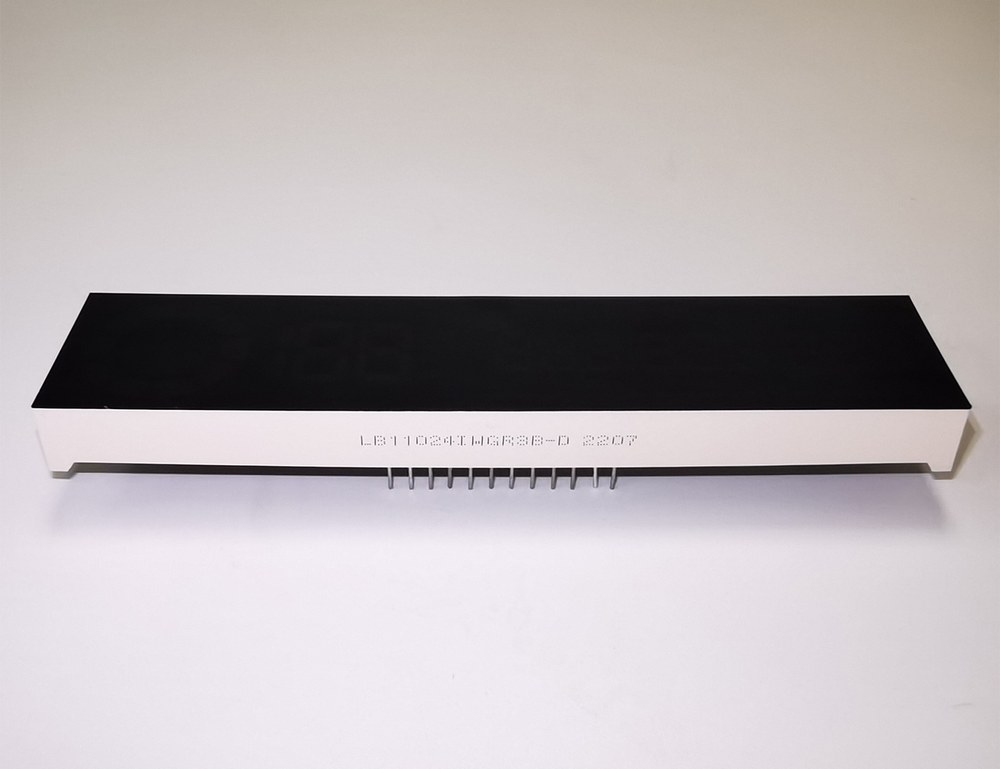
Most projects do not land at either extreme, and the most cost-effective path is usually a hybrid. A standard mechanical base and pinout family is kept, and the customisation is applied to the layers that actually carry the requirement.
A project that needs a custom segment layout but a standard footprint can keep the standard base and apply a custom segment film or layout on top. A project that needs a low-pin interface can take a standard digit module and integrate a driver IC rather than re-engineering the segment geometry. This middle path keeps the cost and schedule of a standard part while removing the one or two mismatches that made the off-the-shelf option not quite work.
The Decision Checklist an OEM Should Run First
Before a quote is requested, a buyer can score the project against a short list. Match the standard module to the board: does the footprint, the pin pitch, and the polarity exist in the catalogue? If yes on all three, the project is a strong stock candidate.
Score the content: does the display need a logo, a proprietary unit, a custom segment shape, or a non-standard digit size? Score the volume: is the programme large enough that the tool cost of a custom part amortises below the stock price at the expected quantity? A project that fails the fit test, needs custom content, and has the volume to amortise the tool is a clear custom case. A project that passes all three of those tests is a clear stock case. Everything in between is the hybrid path, and it is worth prototyping before a custom tool is cut.
Conclusion
Custom and off-the-shelf are not better or worse, and the decision is not about quality. It is a trade between three things: the cost of a tool that only amortises at volume, the schedule step that custom tooling adds, and the fit and content requirements the standard range does or does not cover. The buyer who scores the project against those three before ordering lands on the cheaper and faster path, and the middle option, a standard base with custom layers applied, is usually the cheapest of all.
LIGHTBO supplies standard segment modules and full custom engineering, from a custom pinout and segment layout to integrated driver modules, for industrial, appliance, and instrumentation projects. If you are weighing custom against stock for a specific product, we would be glad to review the board drawing and the requirements with you, suggest the lowest-cost path, and build a sample.
FAQ
Q: What is the main reason a project should choose a custom display over a stock one?
A: The strongest reason is a drop-in pinout: when the existing board already drives a display with a specific pinout and pitch that the catalogue does not carry, a custom module is a drop-in replacement. Custom character content and a non-standard digit geometry are the other two main justifications.
Q: Does a custom display always cost more than a stock one?
A: Not at every quantity. A custom part carries a tool cost that a stock part does not, so its unit price depends on volume. At low volume the stock part is cheaper. At high volume, once the tool is amortised and the custom design removes wasted parts or board space, the custom part can work out cheaper per unit.
Q: How does a custom integrated driver change the project?
A: Integrating a driver IC on the module replaces up to sixteen segment or digit pins with a two- or three-wire serial interface, which reduces the MCU pin count and the board routing.
Q: What is the hybrid option and when does it make sense?
A: The hybrid path keeps a standard mechanical base and pinout family and applies customisation only to the layers that carry the requirement, such as a custom segment film or an integrated driver. It makes sense when a standard module is close but not quite right, because it keeps the cost and schedule of a stock part while removing the specific mismatch.


