
14 vs 16-Segment LED: Master Your Text Readout Design
Time : Jun 11, 2026 View : 876
The Evolution of Text Readouts in Embedded Systems
In electronic design today, engineers need to balance clear visuals, low power use, and simple control. Standard 7-segment displays handle numbers well. They struggle badly with proper English text or detailed symbols. LIGHTBO fills this need. We focus on quality 14-segment and 16-segment displays that work in tough industrial and everyday settings. Knowing the differences helps you pick the right option without raising costs too much or hurting the user experience.
Technical Breakdown: 14-Segment vs. 16-Segment Architecture
You should understand the internal LED layout first. It decides how well the display can form different characters.
The Geometry of 14-Segment Displays
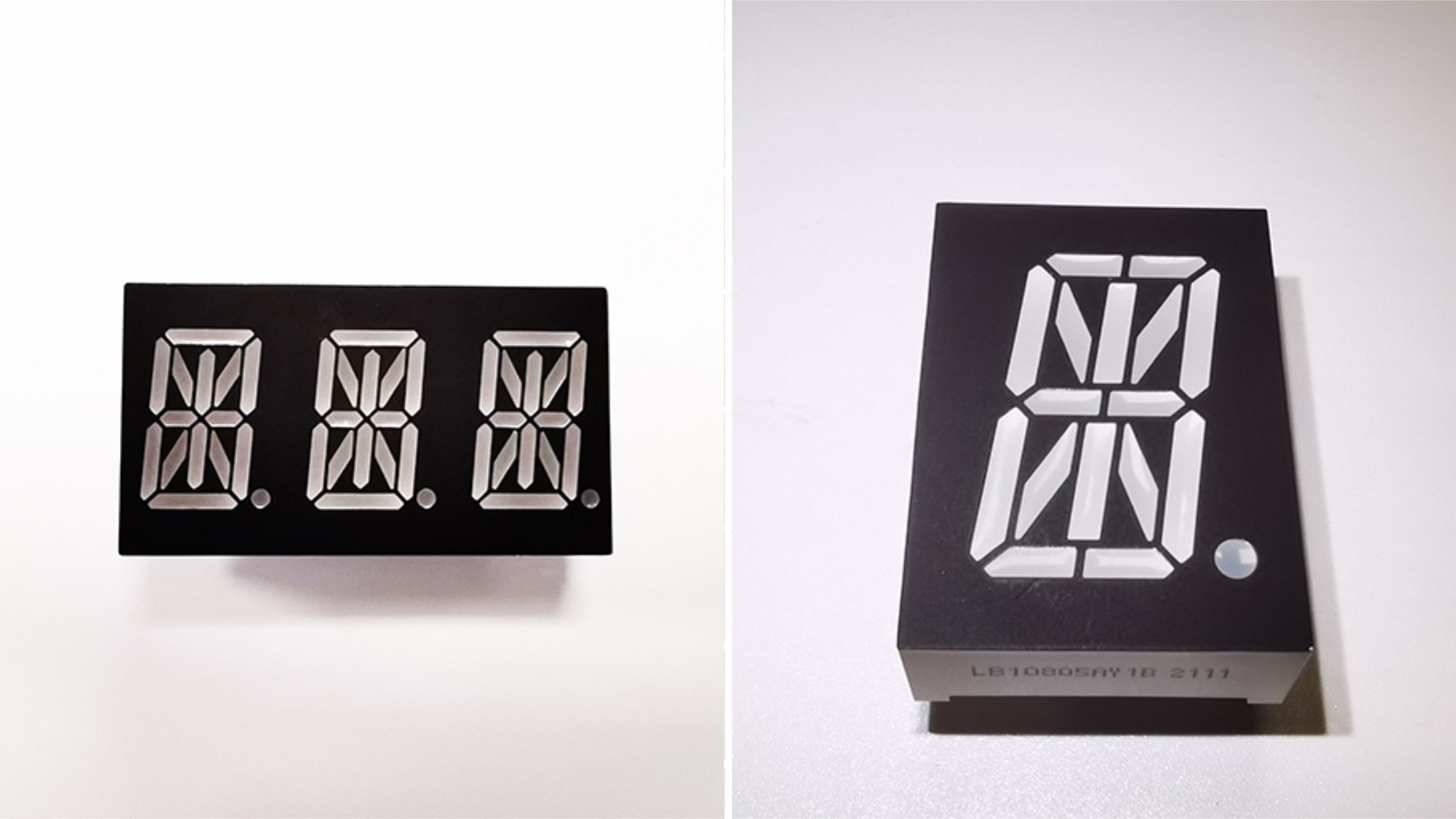
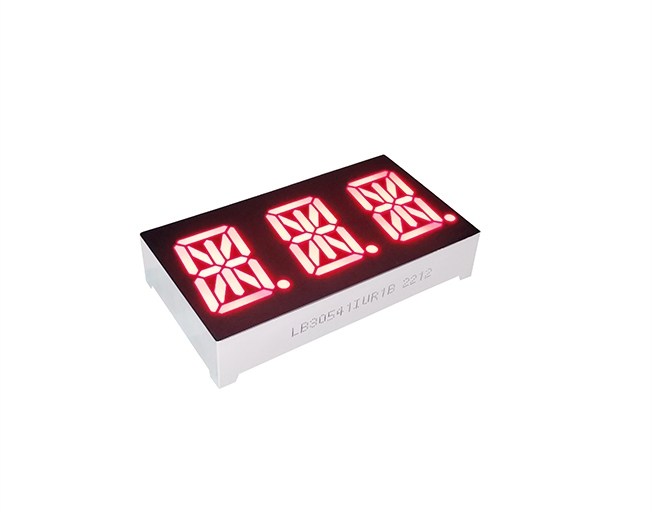
A 14-segment display has 6 segments around the outside plus 8 inner parts in a starburst shape.
- Segment Allocation: It uses 8 diagonal and vertical inner bars along with 6 horizontal and vertical outer bars. It also includes an optional decimal point (DP).
- Diagonal Split: The top and bottom horizontal bars stay as single solid pieces instead of splitting.
- Structural Simplification: This setup means fewer separate LED connections, so wiring stays simpler.
The Geometry of 16-Segment Displays
A 16-segment display adds one key change by splitting the top and bottom horizontal parts.
- Split Horizontal Bars: Both top and bottom lines divide into left and right halves that work independently.
- True Starburst Pattern: The center area lines up cleanly, which creates a straight vertical line from top to bottom.
- Enhanced Linear Symmetry: Characters look smoother with no jagged edges on letters that need straight or split lines.
Choosing the Right Complexity: Performance and Readability Trade-Offs
Picking 14 or 16 segments means weighing better looks against extra system demands. It is not always about choosing the bigger number.
Character Distortion and Font Flexibility
The layout changes how certain letters appear. This affects how easily people can read them in real use.
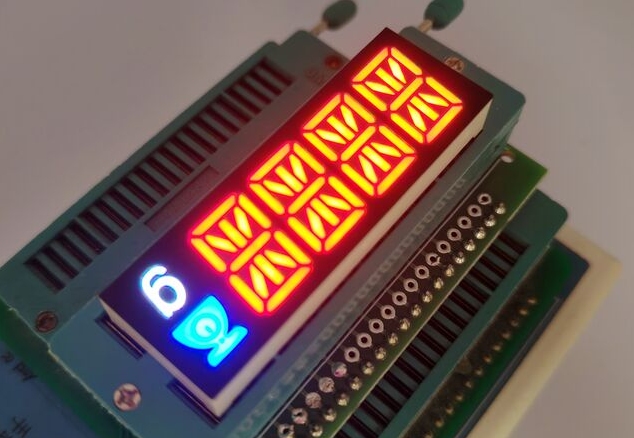
- The Letter “M” and “W”: A 14-segment display forces steep angles that make “M” and “W” look tight. A 16-segment version draws them with even, balanced shapes.
- The Letter “K” and “X”: The split bars on 16-segment displays let the arms of “K” or “X” meet exactly in the middle without overlapping nearby segments.
- Mathematical Symbols: Signs like plus (+), asterisk (*), and arrows (< >) stay sharp and straight only on 16-segment displays.
Pin Count, Multiplexing, and System Overhead
More segments add a bit more work for the control circuits and microcontroller.
- I/O Pin Count: A 16-segment display needs two extra control lines per digit compared to a 14-segment display. This adds a few more traces on the circuit board.
- Driver IC Selection: Many 14-segment setups run on basic shift registers. 16-segment displays often pair better with drivers like the MAX6954 series.
- Refresh Rate Overhead: Driving 16 segments needs slightly stricter timing to avoid faint ghost images or flicker.
Where LIGHTBO Solutions Solve Engineering Challenges
Alphanumeric displays shine in places where regular LCD or OLED screens have trouble, such as very hot or cold conditions, bright sunlight, or tight budgets.
Industrial Instrumentation and Automation Control
Factory control panels need bright text that stays readable from a distance in rough conditions.
- 14-Segment Application: Good for simple messages like “RUN”, “STOP”, “ERR”, or “TEMP” on PLC units.
- 16-Segment Application: Useful on CNC machines or gas meters when you need clear readouts such as “MDI” or units like M3/h without mix-ups.
- The LIGHTBO Advantage: Our industrial modules give strong contrast and wide viewing angles. They hold up to heavy vibration that would break normal LCD screens.
High-End Consumer Electronics and Audio Gear
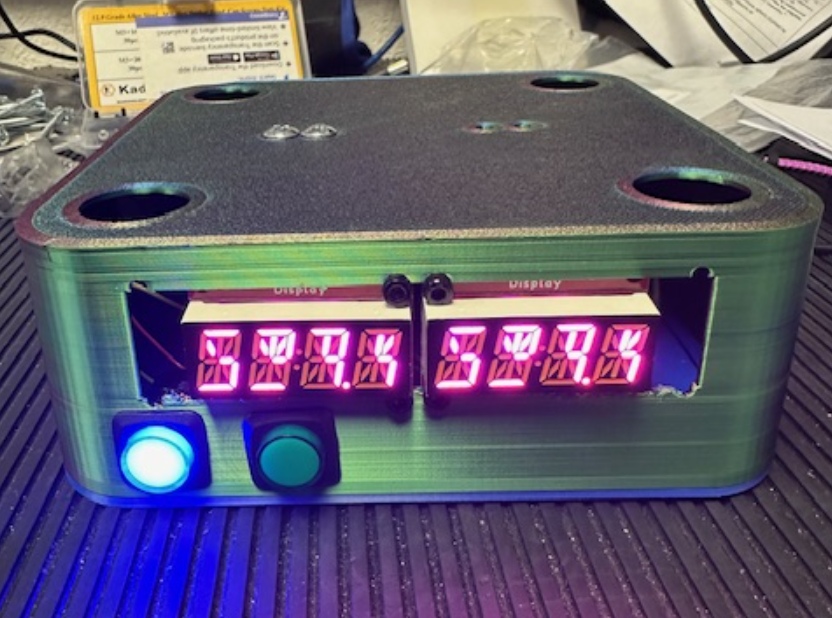
Audio gear and home devices use these displays for a classic look plus clear information.
- 14-Segment Application: Found in microwaves, coffee machines, and thermostats for basic menus or countdown timers.
- 16-Segment Application: Works well on studio mixers, synthesizers, and tuners where song titles or settings scroll across the display.
- The LIGHTBO Advantage: We adjust brightness and colors like ice blue, white, or emerald green to match product designs nicely.
Medical Monitoring and Field Equipment
Medical tools and portable gear need instant, mistake-free reading during busy moments.
- 14-Segment Application: Used in backup power units, sterilizers, and chargers for simple status messages.
- 16-Segment Application: Common in patient monitors or portable ventilators, so medicine names and codes stay clear.
- The LIGHTBO Advantage: Our displays use solid connections and low-power options that help batteries last longer in field use.
Why Partner with LIGHTBO for Your Display Architecture?
LIGHTBO mixes good manufacturing with practical pricing. We run lines that handle standard items and fully custom orders.
- Diverse Product Portfolio: We carry tiny SMD alphanumeric displays and larger through-hole versions in both 14 and 16 segments to match your board size.
- Rigorous Quality Control: Each display goes through checks for even brightness and color matching across all digits.
- Expert ODM/OEM Services: Our team helps with custom pin layouts, faceplate colors, and driver setups to speed up your design work.
Conclusion and Next Steps
Deciding on 14-segment or 16-segment displays depends on how complex your text needs to be and what your hardware can handle. Simple status words and lower costs suit 14 segments well. Full alphabet use, math symbols, or sharp-looking text call for 16 segments as the standard choice.
Ready to improve your product display? LIGHTBO can send engineering samples matched to your project.
Contact Our Engineering Team Today:
- Email: lightbo2@lightbo.cn
- Phone/WhatsApp: +86 18320538436
Let us help you pick, design, and fit the right alphanumeric display for your new product.
FAQ
Q: Can a 14-segment display show all 26 letters of the English alphabet cleanly?
A: Yes, it can show all 26 letters. However, some like “M”, “W”, “K”, and “X” will have visible shape issues because the horizontal segments do not split.
Q: Do 14-segment and 16-segment displays share the same driver Integrated Circuits (ICs)?
A: Many matrix LED driver ICs using SPI or I2C can handle both. You just set up the software mapping differently to cover the two extra pins on 16-segment displays.
Q: Why choose an alphanumeric LED over a monochrome graphic LCD or OLED display?
A: Alphanumeric LEDs give much brighter output, handle wider temperatures from -40°C to +85°C, avoid burn-in problems, and need simpler programming than pixel-based screens.
Q: How does the power consumption compare between 14-segment and 16-segment modules?
A: At the same brightness level, each active segment uses about the same power. Still, 16-segment displays draw a little more when characters light up the split horizontal bars.


