
Why Choose a Common Anode 7-Segment Display Over a Common Cathode
Time : Jan 30, 2026 View : 259
In the field of electronic design, small decisions often separate an ordinary product from one that performs well over time. Engineers and designers frequently face the question of whether to use a Common Anode or Common Cathode setup when adding digital readouts. Both types show numbers and letters, yet the Common Anode (CA) version has become the favored choice in many professional and factory settings. As a major maker in this area, LIGHTBO knows that this pick affects circuit layout, part count, and how long the device lasts.
The Fundamental Difference: Common Anode vs. Common Cathode
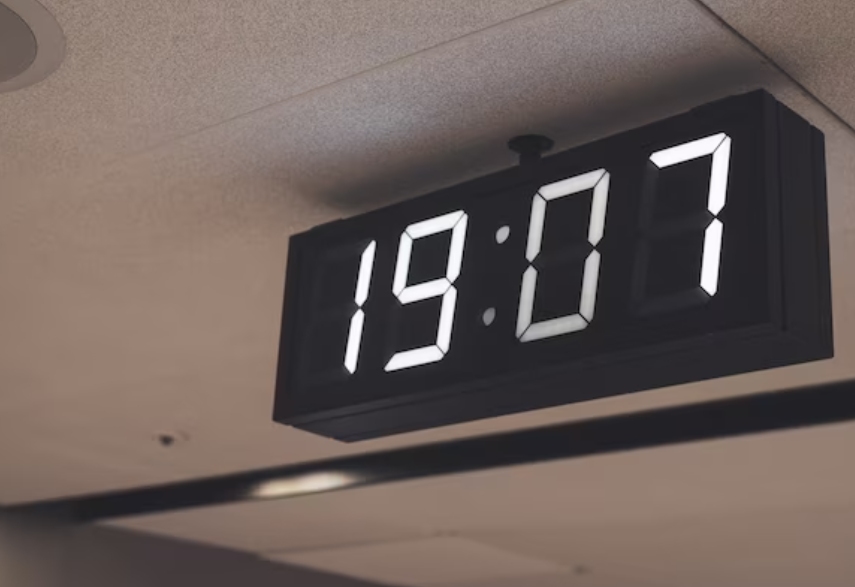
To see why one type might fit better, start with how these parts are wired inside. A 7-segment display has eight separate LEDs—seven for the shape of the digit and one for the decimal point.
Defining Electrical Polarity in 7-Segment Displays
In a Common Anode display, all the positive ends (anodes) of the segments connect to one shared pin. This pin is usually tied to the positive supply voltage. To turn on a segment, the matching cathode pin goes to ground (logic low). On the other hand, in a Common Cathode display, all the negative ends link to ground. Segments light up when a positive voltage (logic high) reaches the individual anode pins. This basic difference shapes the whole way the display is driven.
Why Common Anode Often Prevails in Industrial Design
The choice of Common Anode in advanced equipment—such as factory ovens, test gear, and control systems—comes from practical reasons. It ties closely to how today’s chips and microcontrollers manage current flow.
Current Sinking and IC Compatibility
A key point is that most driver chips and microcontrollers handle “sinking” current better than “sourcing” it. With Common Anode wiring, the chip sinks current to ground to light a segment. Older logic families, like the TTL 74 series, performed much stronger in sink mode. By picking LIGHTBO’s Common Anode displays, designers can use this strength. That often means cleaner circuits with fewer added parts, such as extra transistors.
Thermal Management and System Reliability
Heat can shorten the life of electronic parts. Common Anode arrangements usually make heat handling easier across the whole board. The driving chip sinks the current, so the ground plane on the PCB can carry away heat more effectively. LIGHTBO builds its products with low current needs and good power use in mind. Even when several displays sit close together on a panel, heat buildup stays small.
High-Performance Solutions from LIGHTBO
At LIGHTBO, we supply displays in both wiring types. Still, our Common Anode units stand out for buyers because of their steady operation and bright light output.
Spotlight on the 14-Segment Alphanumeric Display
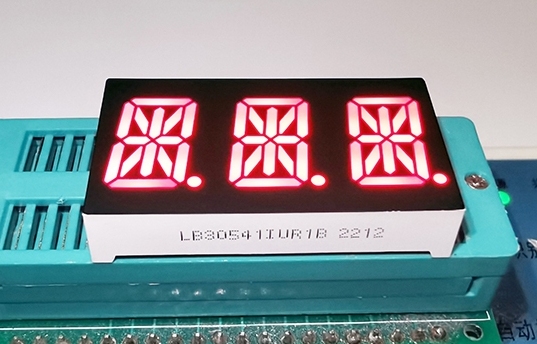
Although simple 7-segment types work well for numbers alone, many customers need clear letters too. The LB30541IUR1B shows what LIGHTBO can do. This three-digit, 0.54-inch (13.8mm height) 14-segment display uses Common Anode wiring. It gives off super bright red light at a wavelength of 625–630nm. Luminous intensity runs from 25 to 35 mcd. That makes it easy to read in bright places, such as control panels or bank rate boards. The outer size measures just 37.8 x 21.1 x 7.9mm. It fits into slim cases yet keeps the even, uniform segments that LIGHTBO is recognized for.
Customization for Specialized Applications: Refrigerators to UPS Systems
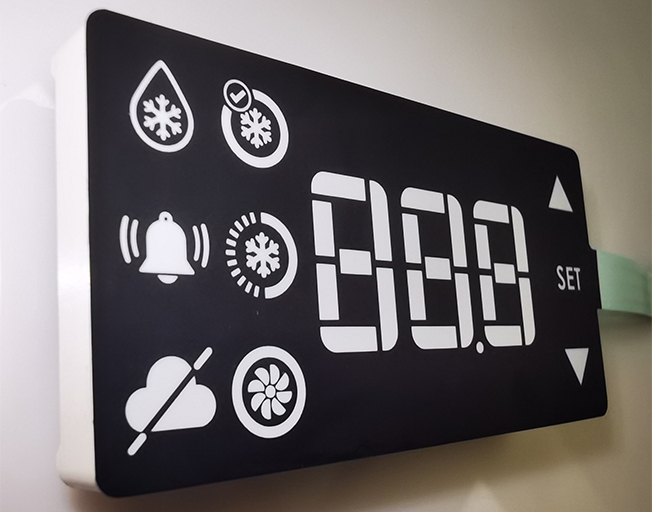
Beyond off-the-shelf items, LIGHTBO excels at custom LED displays. We make tailored white, pure green, and blue 7-segment units for upscale refrigerators. We also build ultra-bright white models for factory ovens. From multicolor thin displays for e-cigarettes to full modules for UPS units, we can supply Common Anode or Common Cathode versions. We work from a customer’s drawing or basic idea to get the fit just right.
Engineering Advantages of LIGHTBO’s Segmented Displays
What makes a LIGHTBO display different comes from careful steps in production. Every unit meets strict world rules, including RoHS standards.
Advanced Materials and “White Segment, Black Surface” Design
One standout trait is the “White Segment, Black Surface” finish. This setup creates the strongest contrast possible. Digits stay sharp and clear. In multimedia devices or digital readouts, this clear view matters a lot. Our segments give off even light across the whole character. That avoids bright spots or dim areas common in cheaper parts.
Longevity and Resilience in Harsh Environments
Factory gear needs parts that last through years of use and tough conditions. LIGHTBO displays reach a life of 80,000 hours. They handle temperatures from -40°C to +120°C for both operation and storage. This strength suits them for car dashboards, fuel gauges, and factory programmable logic controllers, where downtime cannot happen.
About LIGHTBO: A Commitment to Technological Excellence
LIGHTBO started in 2006 in Nanshan District, Shenzhen. We have grown into a leading supplier by following the idea “Pursuing Excellence, Building Success Together. Our plant holds ISO 9001 certification. We run advanced automatic machines and tight production checks so every piece meets our quality marks.
Our own design staff and modern workshop allow full OEM and ODM work. Customers gain from lower development costs and better-fitting solutions. From LED backlight units to dot matrix displays, LIGHTBO stays ahead through fresh ideas.
Conclusion
Picking between Common Anode and Common Cathode 7-segment displays goes beyond simple wiring. It touches on power use, chip matching, and lasting strength. Common Anode types often win out when designers want to use the strong current-sinking ability of today’s chips. Yet the real key lies in the quality of the part itself. With LIGHTBO, buyers get items backed by close to twenty years of production skill. Your digital readouts will not only show clearly but also keep working for years.
FAQ
Q: Why is Common Anode more common in circuits using driver ICs?
A: Many ICs are better at “sinking” current (pulling to ground) than “sourcing” it. Common Anode displays allow the IC to sink current, which is more efficient for the silicon.
Q: Can LIGHTBO provide 7-segment displays in colors other than red?
A: Yes, we offer a wide range of emitting colors, including yellow-green, pure green, blue, yellow, amber, pink, and white to suit various application needs.
Q: What is the benefit of the “White Segment, Black Surface” design?
A: This configuration provides the highest possible contrast, making the display easy to read even in bright ambient light or from a distance.
Q: Are LIGHTBO displays compatible with automated PCB assembly?
A: Yes, our displays are designed for “easy mounting on PCB” and are IC compatible, making them ideal for high-volume automated manufacturing processes.


