
Solving the "Uneven Glow": How LIGHTBO Ensures Perfect Color Consistency in Mass Production
Time : Mar 05, 2026 View : 433
In B2B electronics production, a product’s initial appearance often hinges on the quality of its display. Consider a lineup of ten identical premium ovens in a kitchen showroom. When the Ultra Bright White 7-segment displays on these units show even a minor shift in hue—some with a faint blue tint, others a subtle yellow cast—the impression of high quality vanishes immediately. Procurement specialists and design engineers refer to this issue as the “uneven glow.”
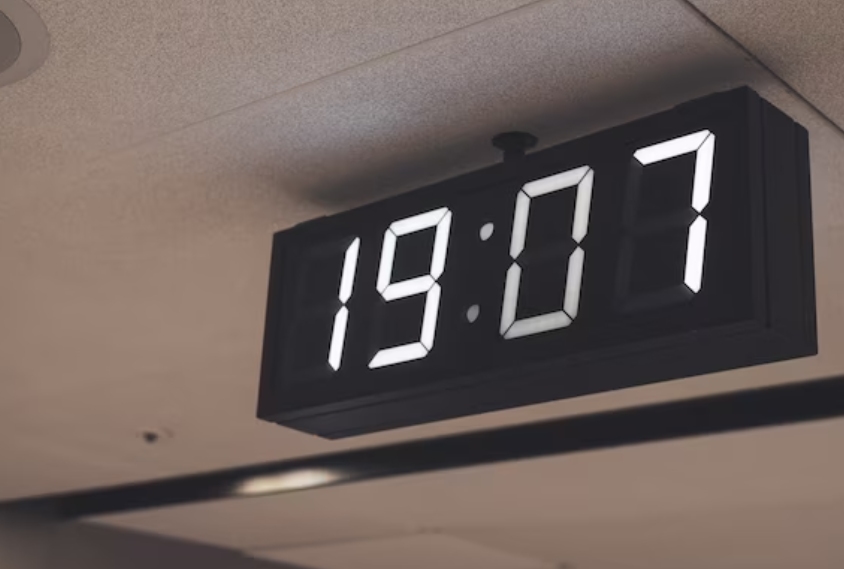
At LIGHTBO, we have learned through years of volume manufacturing that “almost matching” does not suffice. Uniform light output serves as the core of brand reliability.
The Engineering Reality of LED Variance
LEDs function as semiconductors. Like many manufactured electronic parts, they exhibit small but unavoidable differences that occur during the wafer production stage.
The Technical “Binning” Gap: Why random LEDs fail in mass production
Within any single batch of raw LED chips, brightness levels and dominant color wavelengths vary naturally. Manufacturers group these chips into categories known as bins according to shared properties. When the bin range remains too wide, the finished display appears inconsistent. For example, on a six-digit 7-segment LED Display, if the third digit shines roughly 10% stronger than the rest, the user notices a bright patch that draws the eye away from the information and signals careless construction.
The Visual Impact on End-User Perception
Clients in medical equipment or aerospace fields view display variation as more than a cosmetic flaw. It affects practical use. An Alphanumeric LED Display mounted in a control panel with segments of unequal strength can cause reading mistakes in dim surroundings. LIGHTBO responds to this concern directly. We reduce binning windows well beyond common industry practices. Every segment across every digit then produces light of the same wavelength and brightness level.
How LIGHTBO Guarantees Uniformity
LIGHTBO has directed substantial effort toward equipment and procedures that maintain steady performance across large production volumes.
Automated Sorting and Precision Binning Protocols
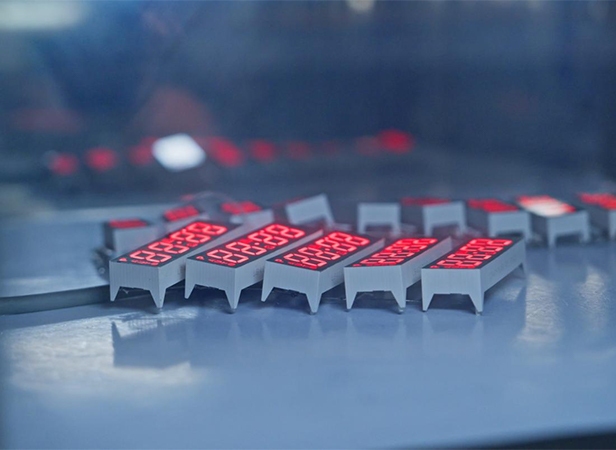
Since the company began in 2006, manual handling has given way to modern automatic systems. High-speed sorting machines now examine each LED’s electrical characteristics and light emission in detail. For items such as 10-Segment LED Light Bars or Dot Matrix LED Displays, only chips from a very narrow bin range reach the assembly stage. This method removes the multicolored patchwork appearance common in lower-grade multicolor products.
ISO-Certified Quality Control and Professional Lab Testing
Our quality management system holds ISO 9001 certification, achieved in 2015. Inside the dedicated testing laboratory in Shenzhen, displays undergo extended reliability trials. Color uniformity receives close attention not merely at initial inspection but after thousands of operating hours. The focus remains on long-term behavior. We verify that the display retains its matched appearance after five years of continuous service in demanding industrial conditions.
Case Studies: Consistency in Action
Specifications on paper hold value. Actual results from production lines demonstrate the practical benefit.
Home Appliances: Perfect Whites for High-End Ovens and Refrigerators
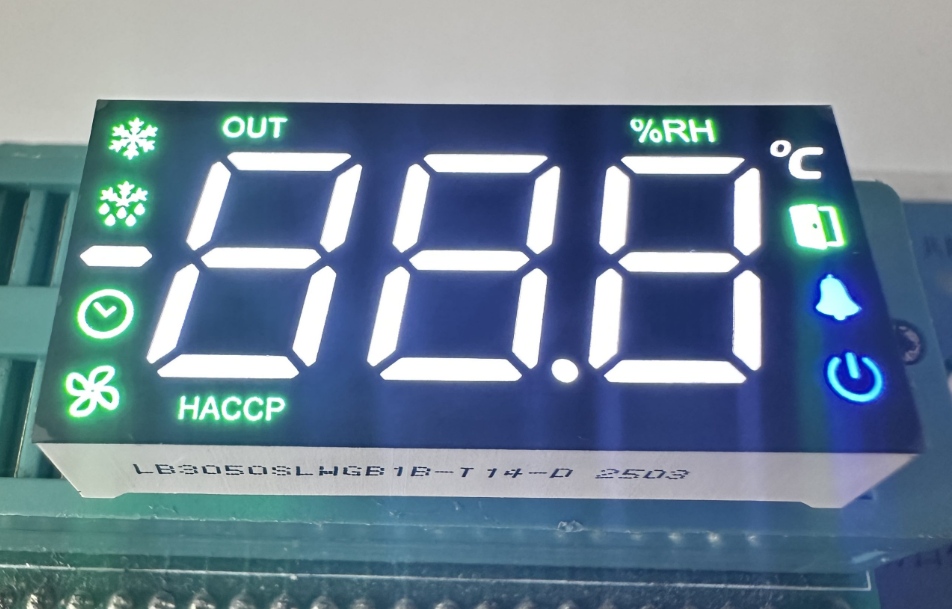
One prominent manufacturer of smart refrigerators requested a Customized White/Pure Green/Blue 7 Segment LED Display 3 Digit 12.7mm. The display mounts behind semi-transparent glass, which amplifies any difference in light output. LIGHTBO supplied Ultra Bright White LEDs, restricted to a 5% variation in intensity. Across thousands of units, the temperature readout stayed sharp and consistent.
Industrial & Power: Reliable Feedback for UPS and New Energy Systems
Equipment in the new energy sector frequently faces tough operating environments. Displaying dependability carries high importance. A producer of Uninterruptible Power Supplies required Multicolor customization of 7 Segment LED Displays. We aligned the Pure Green used for “Normal” status with the Red used for “Fault” across the entire batch. Field technicians now encounter a clean, uniform appearance they can rely on without hesitation.
Micro-Displays: Color Uniformity in E-Cigarettes and Wearables
Small consumer devices allow almost no margin for variation. Even minor differences in segment behavior can produce noticeable flicker. For products such as e-cigarettes, LIGHTBO delivered Multicolor Ultra Thin Custom 7 Segment LED Displays constructed with SMD LED Display technology. The compact parts preserve even color depth despite the tight space and battery-powered operation.
Our Portfolio: Built for Consistency
LIGHTBO products balance design freedom with strict visual matching.
From 7-Segment to Alphanumeric: A Full Spectrum of Reliability
The lineup extends from Single Digit through Six Digit 7 Segment LED Displays to more advanced 14- and 16-segment Alphanumeric types. Whether the application involves a basic timer or a sophisticated diagnostic unit, our design team collaborates closely. We develop precise specifications so that even custom Arrow LED Displays maintain brightness levels identical to standard numeric segments.
Custom Solutions and SMD Integration
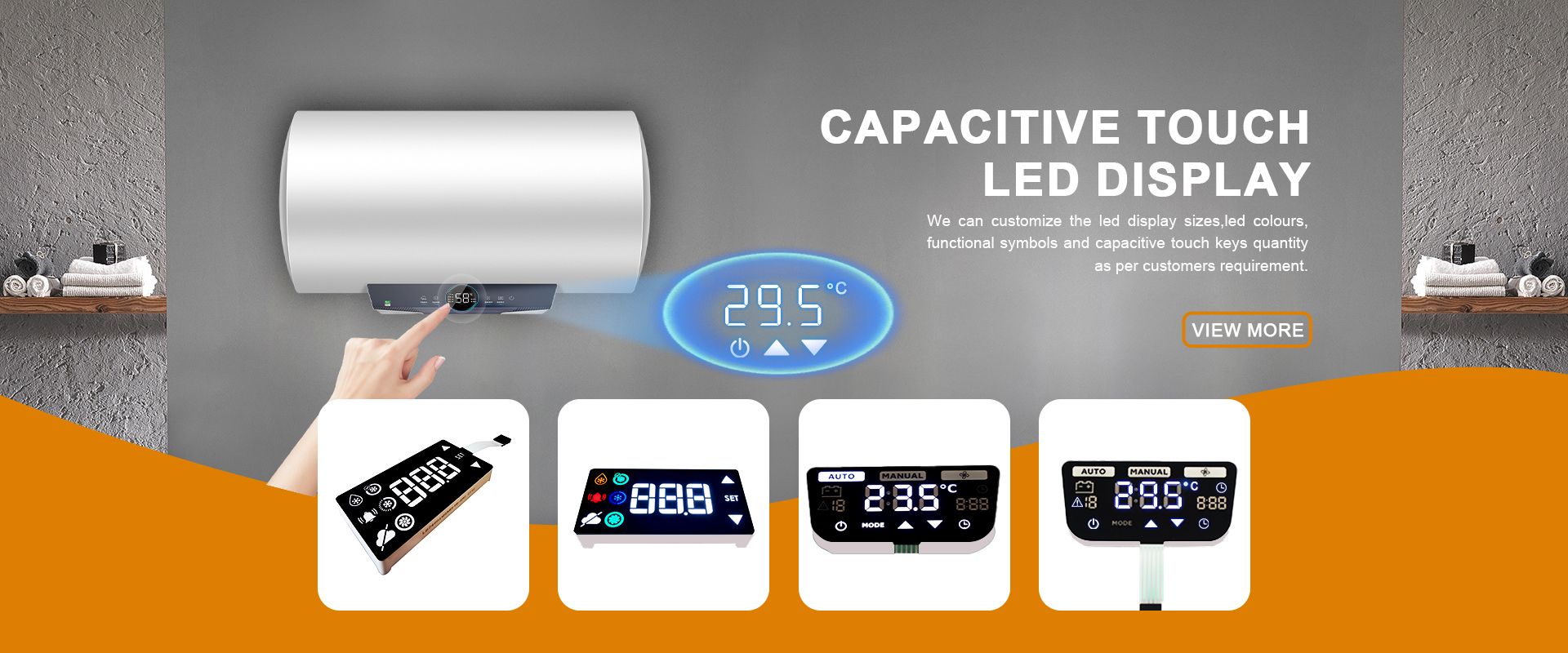
Specialized work includes Custom LED Displays that incorporate integrated circuits or touch-sensitive features. LED Backlight solutions find frequent use in kitchen appliances and temperature regulation products. These edge-lit designs improve clarity on liquid crystal overlays. Since we manage production of both the display segments and the lighting elements, the complete visual result remains balanced and dependable.
Conclusion
Selecting a display supplier means more than acquiring a component. It involves choosing a partner familiar with the subtle behavior of light in production. LIGHTBO (Shenzhen Guangzhibao Technology Co., Ltd.) draws on nearly twenty years of manufacturing experience combined with current automated processes. The objective stays straightforward: remove uneven glow from your assembly line. From Dot Matrix solutions to Multifunction LED Display Modules, our commitment centers on steady progress and mutual achievement.
If you wish to eliminate uneven glow and strengthen the visual standard of your products, consider LIGHTBO as your partner. We provide carefully engineered LED displays suited to your requirements.
-
E-mail: lightbo@lightbo.cn
-
WhatsApp: +86 159 8680 6101
We welcome the opportunity to work together.
FAQ
Q: Why does the color of my LED display seem to shift after several months of use?
A: The shift usually stems from differential aging. LEDs drawn from wide bins or lower-grade material degrade at uneven rates. Over time, the once-matched appearance becomes patchy. Narrow bin selection together with proper thermal design reduces this change significantly.
Q: What is the benefit of SMD LED displays over traditional DIP (Through-hole) displays for color consistency?
A: SMD components generally arrive with tighter production controls and more effective heat paths. These traits help keep the wavelength steady through soldering and extended daily operation.
Q: Can I achieve 100% color matching between different batches of LED displays?
A: Complete 100% uniformity lies beyond reach due to the nature of semiconductor materials. Professional suppliers, however, apply bin-locking techniques. Parts remain within a tight MacAdam ellipse range. Differences stay invisible to normal vision.
Q: How does the drive current affect the brightness uniformity of a 7-segment display?
A: Inconsistent current distribution across segments causes some to appear stronger. Displays built with closely matched forward voltage (Vf) values respond uniformly to the same input. Every segment then lights at the same level.


