
Managing a 7-Segment LED Display Array With Minimal Pins
Time : Dec 12, 2025 View : 243
The Digital Dilemma: I/O Efficiency in Modern Electronics
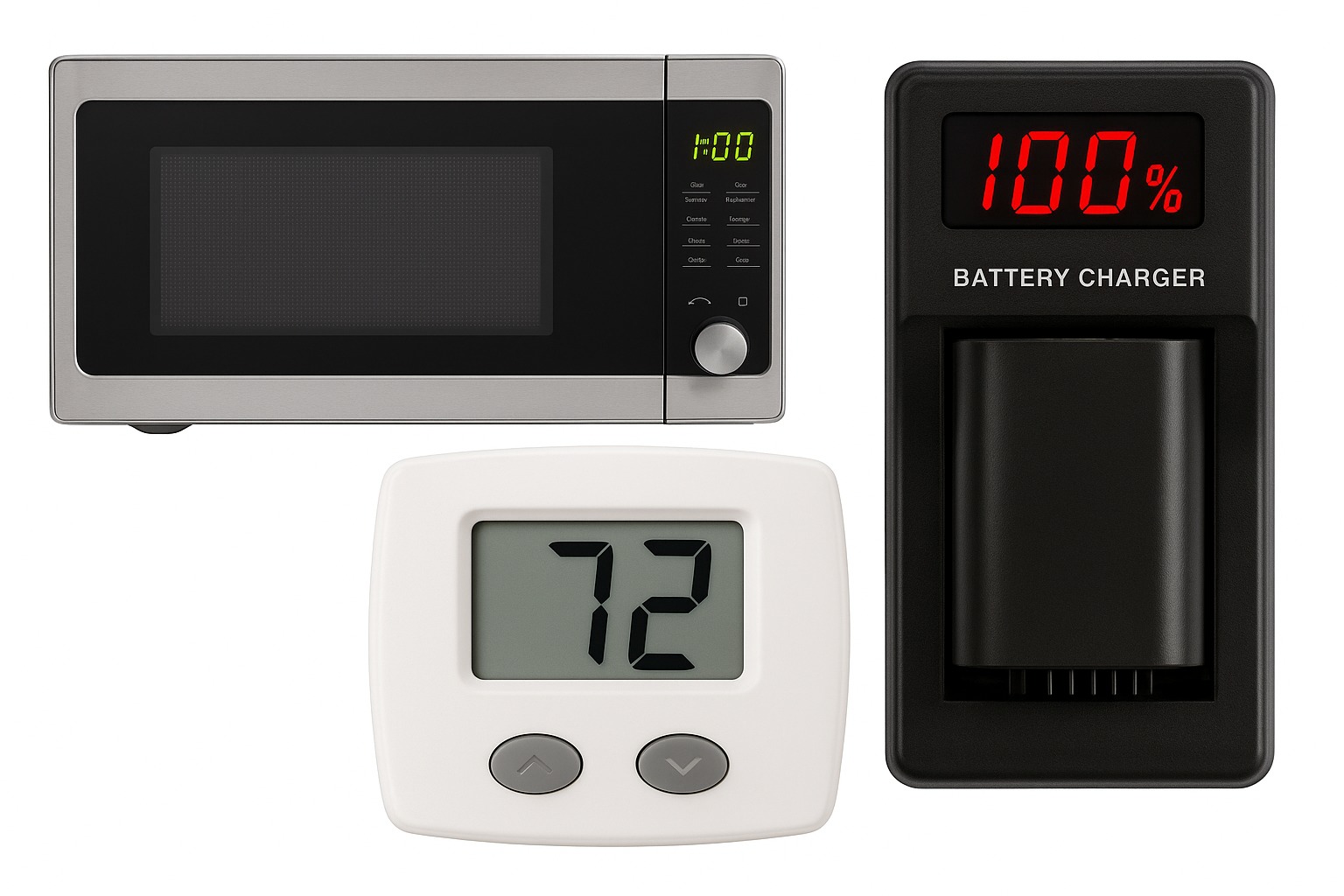
In today’s world of smart appliances and digital instruments, the simple 7-segment LED display is still the go-to way to show numbers clearly. You see them on microwave timers, thermostat readouts, battery chargers, and even large industrial meters. They are cheap, bright, and instantly readable. The problem comes when you need more than one or two digits. A four-digit display driven the naive way can eat up 30–40 pins on your microcontroller, and a six-digit one can push past 50. That leaves almost nothing for buttons, sensors, relays, or communication lines. Suddenly, a small 8-bit MCU just isn’t big enough, and you have to jump to a bigger, more expensive chip—or add extra driver parts.
Real products have to stay small, cheap, and easy to assemble. So the whole industry has spent decades figuring out how to run big digit arrays with just a handful of wires. The tricks are now built right into the displays themselves or into tiny companion chips. This article explains the real-world ways people actually solve the pin-count headache while still getting bright, flicker-free numbers on screen.
Understanding the Foundation: The 7-Segment LED Display
The Architecture of Illumination
Everybody knows the shape: seven bars plus a dot that make the digits 0–9 and a few letters. Each bar is an LED. In a common-cathode digit, all cathodes tie together to ground, and you light a bar by pulling its anode high. Common-anode is the opposite. Either way, one digit needs eight control lines plus the common line. That’s fine for a single-digit counter, but once you add more digits, the wiring explodes.
Addressing Complexity in Arrays
Four separate single-digit displays placed side by side would need 32 segment lines if you tried to control every LED directly. Even if you share the eight segment lines between digits (which most people do), you still need four extra “digit select” lines—one for each common pin. That brings the total down to twelve pins, which is better, but still painful on a small 20-pin chip that also has to read a temperature sensor, drive a buzzer, and talk to a remote control receiver.
Six digits? The same trick gives you eight segment pins plus six digit-select pins = fourteen pins minimum. That is still a lot when your MCU has only eighteen I/O total. And the more digits you switch on and off, the dimmer they look unless you push more current or add brightness control. Real products can’t afford dim displays or hot-running LEDs.
Strategies for Minimal Pin Control
The High-Density Challenge
Walk through any factory floor or look inside a modern washing machine: you’ll see three-digit or four-digit readouts for temperature, time remaining, or power level. UPS units, solar charge controllers, and multimeters often use four to six digits. Nobody runs those straight from the main processor anymore.
Efficiency in System Design
The practical answers fall into three big groups that engineers actually use every day:
-
Multiplexing with discrete transistors or cheap driver chips (like the old 74HC595 shift register or TM1637 modules).
-
Ready-made multi-digit blocks that already contain a small driver inside (for example, 4-digit units that need only four or five wires).
-
Full-featured LED driver ICs with built-in RAM, PWM brightness control, and I2C/SPI interface (MAX7219, HT16K33, etc.).
All three approaches move the heavy lifting away from the main microcontroller. The MCU just sends a short command—“show 1234”—and the display hardware takes care of refreshing the digits 100–1000 times a second, so your eye never sees flicker.
Enhancing Readability and Functionality
Diverse Configurations for Specific Needs
LIGHTBO manufactures every common size most designers ask for: single, dual, triple, quadruple, five-digit, and six-digit versions. One popular part is the 3 Digit 12.7 mm display that shows up in countless refrigerators and air-conditioner panels because it is tall enough to read from across the room yet still fits inside a narrow front bezel.
Application-Specific Customized Solutions
Off-the-shelf parts are fine until the marketing department wants the digits to glow ice-white on a refrigerator door, pure green on a solar inverter, or bright red/orange on an electric oven. Standard red or dull green simply doesn’t look premium anymore. That’s where LIGHTBO’s strength shows up.
-
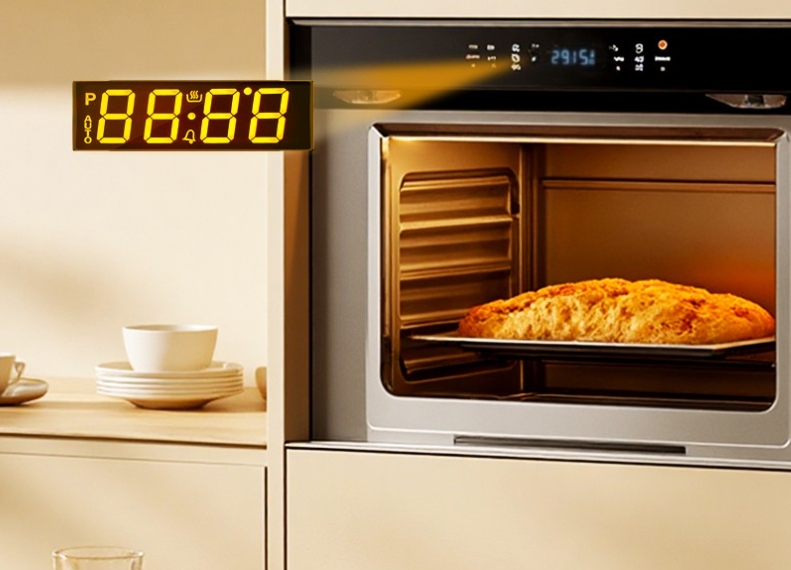
Oven makers order Ultra Bright White Custom 7 Segment LED Displays because white looks clean behind a smoked glass door and stays readable at high viewing angles.
-
UPS manufacturers ask for Multicolor customization 7 Segment LED Displays so they can switch from green (normal) to red (battery low) without extra lamps.
-
Refrigerator brands love the Customized White/Pure Green/Blue 3 Digit 12.7 mm versions because cool-color digits match the “frost” image customers expect.
The factory has its own in-house design crew and automated lines, so turning a new color mix or a slightly taller digit into a production part takes weeks instead of months. They even make the metal lead frames and plastic cases in the same building, which keeps cost and lead time low.
LIGHTBO: Expertise in Customized Display Solutions
A Commitment to Excellence
LIGHTBO started back in 2006, making nothing but LED numeric displays and dot-matrix modules. Today, we ship millions of pieces every year into washing machines, induction cookers, electricity meters, and charging stations.
Their main lineup covers:
-
Standard and custom 7 Segment LED Displays
-
5×7, 5×8, 8×8, and 16×16 Dot Matrix LED Displays
-
Clock and multifunction modules with built-in drivers
-
SMD and through-hole LED backlights for LCDs
Quality and Development Advantages
The plant runs a real test lab—not just a guy with a meter. Every batch goes through high-temperature storage, thermal shock, and 1,000-hour life tests. Certificates on the wall include RoHS and the Trust Seal audit.
On the development side, we keep a team of engineers who speak fluent schematic and layout. A customer sends over a rough drawing (“we need four digits, 20 mm tall, pure green, common anode, and it has to run from 3.3 V”), and two weeks later, they get working samples.
Conclusion: Driving the Future of Digital Interface
Running a big seven-segment array no longer means wasting half your microcontroller pins. Between smart multiplexing, ready-made driver chips, and displays that already contain the driver inside, most new designs get away with four to eight wires total—even for six bright digits. Companies like LIGHTBO make the hardware side painless by supplying exactly the color, height, and pinout the product needs, often at prices lower than rolling your own board.
When you pick the right part up front, the display stops being a headache and turns into the clearest, most reliable part of the whole user interface.
FAQ
Q: What range of 7-Segment LED Displays does LIGHTBO offer?
A: LIGHTBO offers a full range of 7-Segment LED Displays, from single-digit up through six-digit configurations.
Q: What applications are LIGHTBO’s displays used in?
A: Our display devices are widely used in household appliances, instruments, the new energy industry, industrial fields, and power systems.
Q: Can LIGHTBO provide custom-colored displays?
A: Yes, LIGHTBO provides multicolor customization, including Ultra Bright White, Pure Green, and Blue options, for various applications like ovens, refrigerators, and UPS systems.
Q: What core values does LIGHTBO uphold?
A: The company upholds the core values of “integrity, innovation, collaboration, and win-win,” relying on the philosophy of “Pursuing Excellence, Building Success Together”.


