
What to Consider Before Ordering LED Display Modules in Bulk
Time : Jul 10, 2026 View : 407
The High Stakes of Bulk LED Procurement
When you work on complex industrial hardware or produce consumer electronics in large numbers, picking the right component supplier can decide if your product launch succeeds or fails. In the area of visual displays, buying parts in high volumes means finding the right mix of technical details, long-term dependability, and good value for money. As a leading LED manufacturer, LIGHTBO focuses on strong display solutions built to handle tough corporate requirements worldwide. Whether you update instrument panels on an assembly line or create a smart home device, reviewing important technical details ahead of time helps make the integration process run smoothly. This detailed guide covers the main engineering and supply chain points you need to check before you place a bulk order for your next digital display project.
Defining Layout Requirements: Finding Your Ideal Match
Before you dive into the electrical drawings, you need to figure out how the information will show up for the person using it. The physical arrangement affects both how easy it is for users and the space it takes up on your printed circuit board (PCB).
Choosing the Right Configuration (Single to Multi-Digit)
Picking the best number of digits comes first, so your interface can share data in a clear way.
- Single Digit & Dual Digit: These work well for basic countdowns, simple timers, and level indicators in factories where space stays tight.
- Three Digit & Four Digit: They serve as the common choice for oven clocks in homes, digital thermometers, and smart energy meters.
- Five Digit & Six Digit: These suit precision work in factory instruments, car odometers, and multi-channel power systems that need longer number displays.
Matching Dimensions and Types to Your Product Housing
A good mechanical fit makes sure the display sits flat against the front panel of your product without putting extra pressure on the structure.

- SMD LED Display Options: Surface-mount types give a very thin profile that fits easily into automated assembly lines for compact consumer products.
- Alphanumeric LED Display Modules: These become necessary in more advanced setups that need both numbers and text for error messages or status updates.
- Bezel and Face Colors: Options like black or gray faceplates help boost contrast with the lit LED segments in various lighting situations.
Optical Performance and Durability: Key Engineering Factors
The display has to stay bright, sharp, and easy to read during its whole working life, even in tough conditions.
Luminosity, Wavelength Consistency, and Backlighting
Keeping brightness even across thousands of units stops obvious differences when products sit on store shelves.
- Binning Categorization: Top manufacturing groups LEDs by exact brightness and color wavelength so every segment looks the same.
- LED Light Bar & Arrow LED Display Integration: Adding clear light bars or arrow indicators gives quick visual cues for power status or direction of flow in equipment.
- LED Backlight Optimization: Using even LED backlights makes sure any extra text or buttons stay readable in complete darkness.
Robust Material Selection for Industrial Environments
Factory equipment needs to handle difficult surroundings without losing segments or burning out early.
- Thermal Tolerance: Special resins and base materials let the modules run without issues in hot places like commercial kitchens or heavy machines.
- Moisture Resistance: Tight seals guard the internal connections against damp air and water buildup in outdoor charging stations.
- Vibration Defiance: The solid build keeps parts safe when mounted in vibrating tools or large industrial gear.
Drive Method and Pin Configuration: Simplifying Integration
Adding a new display to your current circuit requires attention to the electrical setup to cut down on pins and power use.
Multiplexing vs. Direct Drive
The way you drive the display changes how complicated your controller software becomes, and the wiring on the board.
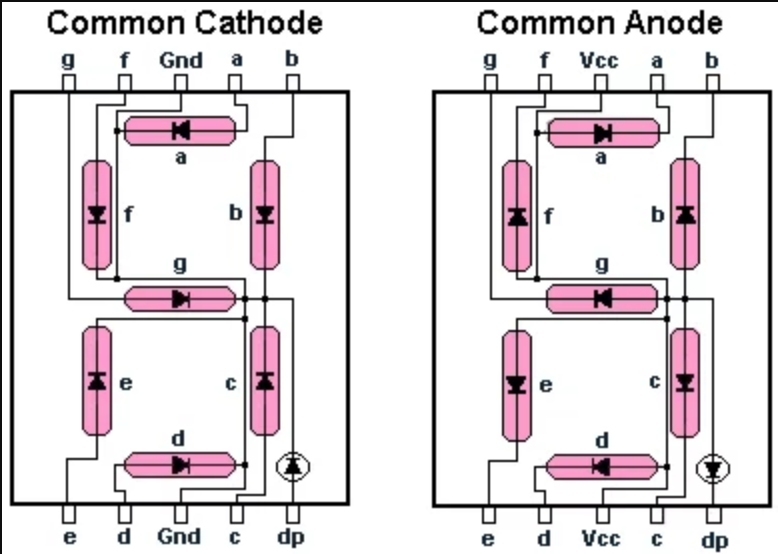
- Common Anode Architecture: This joins all positive sides together and works with sinking driver chips.
- Common Cathode Architecture: It connects the negative sides and fits standard sourcing drivers.
- Multiplexed Wiring: This links matching segments from different digits, which greatly lowers the total pins needed on the controller.
Pinouts and PCB Compatibility
Setting the pin layout early saves time when you design the board.
- Through-Hole Technology (THT): It offers solid mechanical hold, which many choose for tough industrial controls.
- Dot Matrix LED Display Matrixing: For more detailed outputs, choices such as 16×16, 8×8, 5×8, or 5×7 Dot Matrix LED Displays support graphics and smooth text movement.
- Custom Pin Tailoring: Adjusting pin length or bend angles removes the need for extra boards or complicated wiring.
End-to-End Solutions: Beyond the Component
A good large-scale rollout depends on the technical skills and checks from your manufacturing partner.
The Power of OEM/ODM Customization
Ready-made parts seldom match every detail in a new product design.
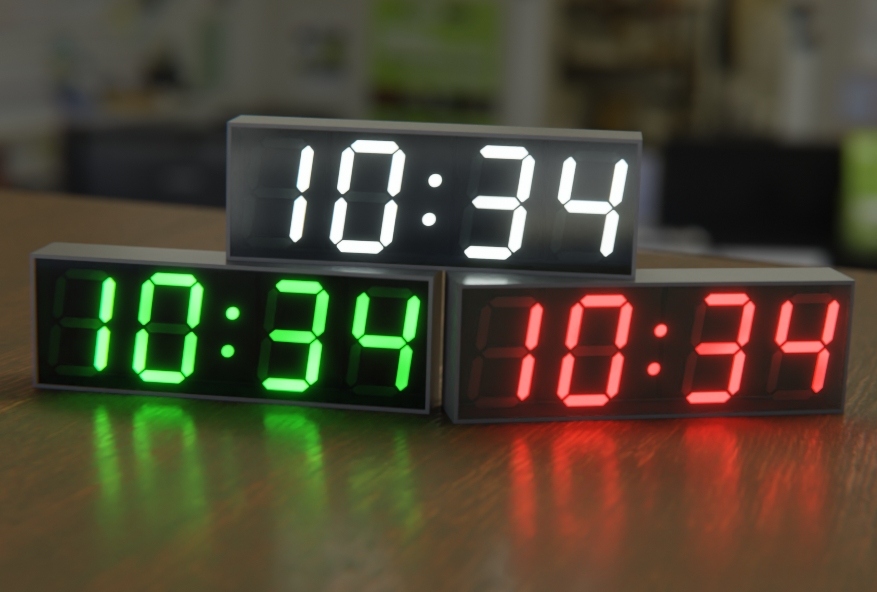
- Custom LED Display Design: Creating special symbols, custom icons, and unique letter-number setups lets you match the display to your own system.
- Tailored PCB Backing: Building complete sub-assemblies through ODM/OEM Service that include the display, driver chips, and connectors as one ready-to-use unit.
- Rapid Prototyping: Speeding up the move from drawing to actual sample helps meet short deadlines for market entry.
Quality Assurance in Massive Bulk Runs
Careful testing makes sure big shipments come without problems and lowers return rates at your factory.
- Automated Optical Inspection (AOI): Checking every segment after building confirms clean alignment and solid connections.
- Accelerated Aging Tests: Running sample batches through heat and humidity stress confirms they hold up over time in real use.
- Comprehensive Functional Testing: Measuring forward voltage, reverse current, and maximum brightness against the exact datasheet values.
Take Your Display System to the Next Level
Picking the right 7-segment display means weighing the physical layout, how it looks, and the electrical setup. Working with a focused maker like LIGHTBO gives you well-matched, dependable parts suited for industrial controls, power equipment, or home appliances. Their ODM/OEM services and strong quality checks help your production move from first samples to final delivery without major holdups.
Ready to improve the display in your product? Reach out to LIGHTBO at lightbo2@lightbo.cn or call +86 18320538436 for samples, custom data sheets, and pricing on large orders.
FAQ
Q: What is the main difference between common anode and common cathode configurations in a 7-segment display?
A: In a common anode display, all the anodes of the segments connect to one positive power pin, and you turn on individual segments by connecting their pins to ground. In a common cathode display, all negative terminals join at ground, and you light segments by sending positive voltage to each pin.
Q: How does multiplexing reduce the pin count in multi-digit LED modules?
A: Multiplexing joins the same segments from all digits together, so you only need one group of segment pins for the whole unit. The system quickly switches power to each digit’s common pin in turn. Because of this, the eye sees a steady multi-digit view while the controller uses far fewer pins.
Q: Why do industrial-grade displays require specific binning during mass production?
A:LED production creates small differences in brightness and exact color. Binning sorts the LEDs into close groups so that when thousands of modules go into control panels, each one shows matching color and brightness levels.
Q: Can a standard LED module withstand extreme outdoor or high-temperature environments?
A: Ordinary modules can fade, lose brightness, or develop cracks in rough settings. For demanding spots, you need to ask for special epoxy covers, boards that handle wide temperature ranges, and face materials that resist UV light, water, and expansion from heat.


